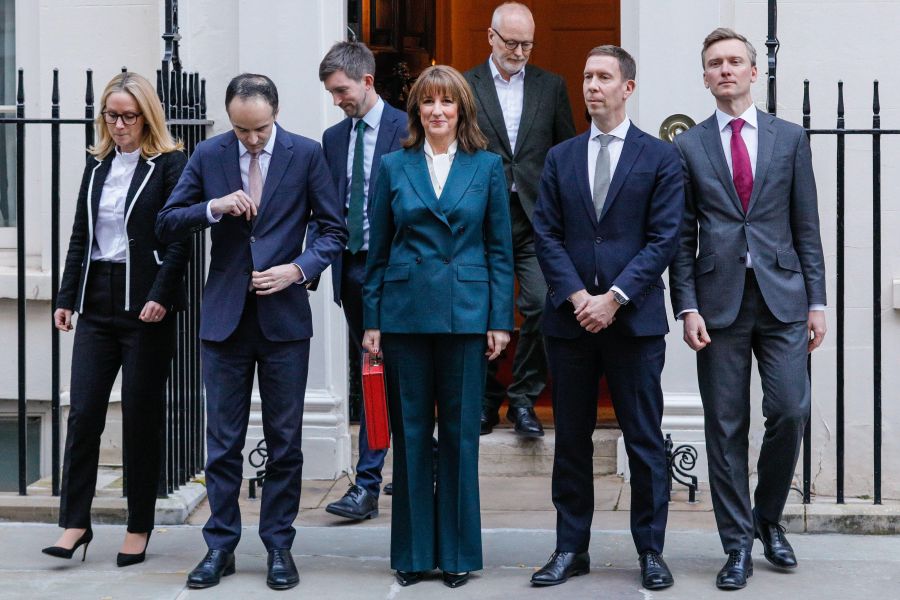
The Chancellor gets ready to pose with her team for the infamous red box photo outside No. 11 Downing Street on Wednesday © Imageplotter/Alamy Live News
Only one thing that could possibly be here this week, as after weeks of speculation, rumours, leaks (more on that in a second) and pre-announcements, Rachel Reeves stood up on Wednesday to deliver her second Budget as Chancellor of the Exchequer, revealing £26bn of revenue raising measures, and making some decisions to appease Labour’s increasingly unruly backbenchers (and frontbenchers for that matter). But, just an hour before she delivered it, the Office for Budget Responsibility accidentally published their Economic and Fiscal Forecast, basically revealing everything that was going to be announced (that hadn’t already been), and stealing much of the Chancellor’s thunder. They’ve launched an investigation into it, with a cyber-security expert brought in, despite the suggestions being it was a human error rather than anything malicious…
So, just what was in the Budget? Income Tax and National Insurance thresholds frozen for another three years to 2031; Plan 2 student loan repayment threshold frozen until 2029-30; a ‘high-value council tax surcharge’ of £2,500 on properties worth over £2m and £7,500 on properties worth over £5m; a reduction in the cash element of an ISA to £12,000; the Energy Company Obligation scheme scrapped; the two-child benefit cap scrapped; the minimum wage raised to £12.71 for over-21s; exemptions for milk-based drinks removed from the Soft Drink Industry Levy and the sugar threshold reduced to 4.5g sugar per 100ml; fuel duty frozen; a new Electric Vehicle Excise Duty; rail fares and NHS prescription charges also frozen; business rates reformed to lower rates for 750,000 retail, hospitality and leisure properties, with higher rates on properties worth over £500,000; the State Pension increased by £575 a year due to the Triple Lock; online gambling duty increased; English Mayors given powers to raise a visitor levy on overnight accommodation; a cap on the pension salary sacrifice scheme of £2,000; all VAT invoices to be issued in a specific electronic format from April 2029; guaranteed six-month paid work placements for eligible 18-21 year-olds who have been on Universal Credit for 18 months; funding for SME apprenticeships for eligible people under 25; and a new £925 per-student, per-year levy on higher education providers’ income from international students after the first 220 international students from 2028-29. Usual disclaimer that all these things won’t be happening immediately, with various timeframes for implementation.
And what wasn’t in the Budget, but had been rumoured to be? increases to Income Tax, Employer or Employee National Insurance; an ‘Exit Tax’ on people leaving UK; employer National Insurance contributions on partnership profits; increased taxes on banks; a cut to the VAT rate for hospitality; a ‘wealth tax’; and a flat 6% tax on international students.
If you work in the public affairs industry and are not one of our clients but would like a preview of our full and comprehensive Budget analysis detailing all the documents published, consultations launched and reaction from politicians, industry, trade unions and think tanks sent alongside their 0830 Morning Briefings on Thursday, please do drop us a line
£820m – amount of money the Chancellor has committed to the Youth Guarantee scheme, helping 18-21 year olds find work-based placements
£150 – amount saved off energy bills on average per household, following changes made to the Renewables Obligation and Energy Company Obligation schemes at the Budget
£6.4bn – cuts to public spending the Resolution Foundation calculated the Government will make at the end of this decade… equivalent to 88% of the average annual cuts made during the peak austerity years.
£8.3bn – the additional taxes UK workers will pay each year, after income tax thresholds were frozen for a further three years from 2028.
60 – the number of days since Business Secretary Peter Kyle pledged to implement the Employment Rights Bill “in full”, during his speech at the Labour Party Conference
20 – number of people who have made complaints against Nigel Farage, suggesting the Reform UK leader made racist and antisemitic remarks to fellow students during his school years at Dulwich college
83 – number of countries at COP30 who joined a coalition aiming to produce a roadmap to phase out of fossil fuels, after a pledge to end fossil fuel use was not included in the Conference’s final text
27 – to the joy of all working in public affairs after this week… the number of days until Christmas
Two day ahead of the Budget, the CBI Annual Conference saw Business and Trade Secretary Peter Kyle deliver a keynote speech, in which he insisted that economic growth remains the Government’s number one mission. He pointed to progress made by the Government so far, including new trade deals, the Industrial Strategy, and investment in national infrastructure projects and in R&D. In an attempt to placate concerns amongst business leaders of the effects of the Employment Rights Bill on already increasing unemployment rates, the Business Secretary announced there will be 26 consultations on the Employment Rights Bill… but only after it’s passed into law (go figure?).
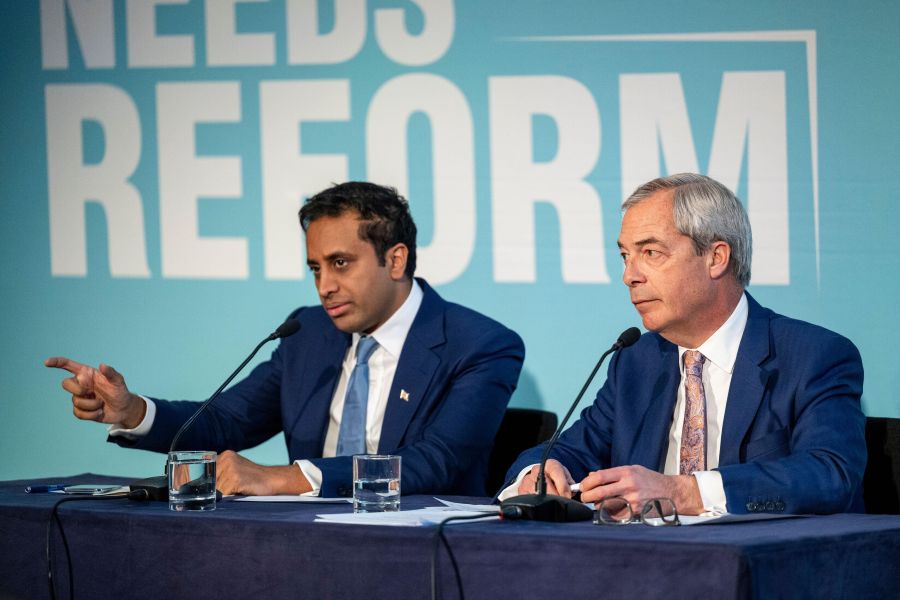
Conservative Party Leader Kemi Badenoch and Reform UK Head of Policy Zia Yusuf also addressed the Conference, with the Tory Leader launching an attack on the Employment Rights Bill as a “330-page assault on flexible working written in the TUC’s headquarters”. Zia Yusuf held a Q&A session in which he stressed the urgency of tackling high energy costs and called for UK universities to better commercialise research.
The Employment Rights Bill will no longer include plans for day one rights to claim unfair dismissal, after the Government undertook an almighty U-turn on a key issue that has caused the Bill to stall in the Lords. This is despite Business and Trade Secretary Peter Kyle kicking off his Labour Conference speech in September by telling delegates: “Let me start by making something absolutely crystal clear: I will implement the Employment Rights Bill in full” (two months is a very long time in politics…). The move has been welcomed by businesses as a starting point to improve a Bill that has been widely warned will lead to higher unemployment, but has been condemned by trade unions and those on the left of the Labour Party as a betrayal of workers.
Trial by jury is set to be scrapped in all but the worst crimes… if proposals reportedly leaked from the Ministry of Justice go ahead. The proposals reportedly show the Justice Secretary David Lammy wants to create a new tier of courts where judges will preside over the verdict for defendants whose alleged crimes carry prison sentences for up to five years. The proposals have been widely condemned by legal groups… and strangely by David Lammy himself who has vociferously defended the right to trial by jury in the past.
A new Government unit – GDS Local – was launched to help councils across the UK make everyday services easier, faster, and more accessible. The new ‘local’ unit from the Government Digital Service is a step towards bringing all Government services under a single Gov.uk login, and aims to reform how councils buy and learn from technology, including through mass anonymised data sharing.
The Prime Minister spent last weekend in South Africa at the G20 Summit during which he launched a programme to support SMEs, and announced the UK will partner with the Johannesburg Stock Exchange to accelerate the growth of South Africa’s tech ventures. It is the first time the summit has been held in Africa, but was overshadowed by non-attendance from the presidents of the USA, China and Russia. Since the event, Donald Trump has poured fuel on the fire, by announcing South Africa will not be invited to the G20 meeting in Florida next year after he accused the South African regime of committing a “genocide” against “white farmers”: claims which have been widely debunked.
Ukraine and Russia appeared to edge closer to a peace deal this week after US-brokered negotiations produced a revised peace framework. Ukraine agreed to the core terms of a 19-point plan, replacing an earlier 28-point deal drafted by the US that had been criticised for heavily favouring Moscow. The updated proposal scales back Russia’s demands, allowing Ukraine to retain a larger military and postpones decisions on NATO membership and territorial concessions until after a ceasefire. Trump claimed there had been “tremendous progress” in talks in Geneva and Abu Dhabi, stating that only minor details were left unresolved; but with Putin calling the initial 28-point plan, the “basis for future agreements”, it remains to be seen what progress can be made next week.
The UK signed a £4bn maritime deal with Indonesia at the end of last week. The new Maritime Partnership Programme led by British defence firm Babcock, will see the UK and Indonesia jointly develop maritime capability for Indonesia’s navy and more than 1,000 vessels for its fishing fleets. The deal is set to secure 1,000 jobs in the UK.
Heathrow Airport’s proposal for the new runway was selected by the Department for Transport as the basis for the airport’s expansion. The Government announced that the proposals offered ‘the most deliverable option’ and provides the greatest likelihood of meeting the government’s ambition for a decision on a development consent application within this parliament.' The proposal will see a third 3.5km runway built at the northwest of the airport, a new terminal complex to the west, and a realignment of the M25 below the new runway.
250 new Neighbourhood Health Centres will be built across the country, the Department of Health announced on Tuesday (one of the myriad of Budget announcements to come… before the Budget). The ‘one stop shops’ for health will aim to bring GPs, nurses and pharmacists together under one roof to move care out of hospitals and closer to communities. The Government are gearing up for a fight with its left flank however, after announcing that 70 of the new builds will be delivered through Public-Private partnerships.
Milkshakes will now come under the Soft Drinks Levy, after Health Secretary Wes Streeting also pinched a Budget announcement on Tuesday, to let MPs know during Health Questions that the levy will now include bottles and cartons of milkshakes, flavoured milk and milk substitute drinks, and that they are reducing the threshold from 5 to 4.5 grams of sugar per 100 ml.
Ahead of the Budget, the English Devolution and Community Empowerment Bill completed its remaining stages in the House of Commons, seeking to rebuild and reform local government and give communities stronger tools to shape their local areas. The Bill has already been read a first time in the Lords and is due to face scrutiny in the other place before Christmas.
The Government are pushing ahead with their generational smoking ban, as the Tobacco and Vapes Bill wrapped up its committee stage in the Lords on Wednesday. It comes amid concerns that the Government could face fines for implementing the Bill in Northern Ireland, after Slovakia, Romania and Greece told the European Commission it risks breaking EU law in NI due to the Windsor Framework. Also in the Lords, the Diego Garcia Military Base and British Indian Ocean Territory Bill completed committee stage, while the Sentencing Bill commenced this stage.
Outside of the legislation, a number of UQs and statements were delivered (as per usual), including on COP30 following the conclusion of negotiations last week. Energy Secretary Ed Miliband highlighted that progress was made at the summit on three issues: redoubling efforts to keep global warming to 1.5 degrees, with a number of countries including the UK and China globally pledging to cut emissions; agreeing to target a share of the global resources that were agreed at COP29 towards a trebling of adaptation finance by 2035; and highlighting the need to transition away from fossil fuels, with a coalition of 83 countries agreeing the importance of a roadmap for the transition (although this was not included in the final text due to some countries objecting).
And the results are in… with YouGov polling having found public reaction to the 2025 Budget to be overwhelmingly… negative. Almost half of Britons (48%) have said the Budget is unfair, with only 21% calling it fair. Just 3% think it leaves them better off, and only 9% say the same for the country. Ipsos also finds that 56% are now more concerned about the economy, with 77% expecting it to be in a poor state in a year’s time. While several measures, such as gambling tax increases, frozen rail fares and increasing the minimum wage attracted broad support, cuts to ISA limits and new pension caps were widely unpopular. Add to that the fact that approval of Rachel Reeves has now slipped to 11%, down from 14%.
The cost of employing low-wage workers is rising sharply, according to new analysis from the Centre for Policy Studies, which attributes the increase to a combination of tax and minimum wage rises now in two successive Labour Budgets. Between 2024 and 2026, the annual cost of hiring a full-time minimum-wage worker over 21 has increased by £3,414, while costs for 18- to 20-year-olds have risen by £4,095, with the changes disproportionately impacting younger and less experienced workers.
Meanwhile, Jeremy Corbyn and Zarah Sultana’s “Your Party” finally gets its big debut tomorrow, with the founding conference ready to go ahead this weekend. Enthusiasm for the left-wing movement has, however, cooled since its formation in July, with just 12% of Britons considering voting for it, down from 18%. According to YouGov 85% of those supporters are also keeping an eye on the Greens, and only 4% are exclusive to Your Party (to be swapped with whichever name they choose to settle on this weekend).
It’s reassuring to know that even as Prime Minister, you can still get told off by the headteacher. During a visit to a primary school in Peterborough with Education Secretary Bridget Phillipson, Keir Starmer was reading with pupils when one of them noted that they were on pages 6 and 7. (For those of you with children on social media, you know where this is going.) The father of two then mimicked the viral “6–7” meme, which involves a juggling hand gesture, resulting in many of the children laughing and following suit. He was promptly told off by the headteacher, who noted that the pupils “get into trouble for saying that”, prompting the Prime Minister to sheepishly insist: “I didn’t start it, Miss.”