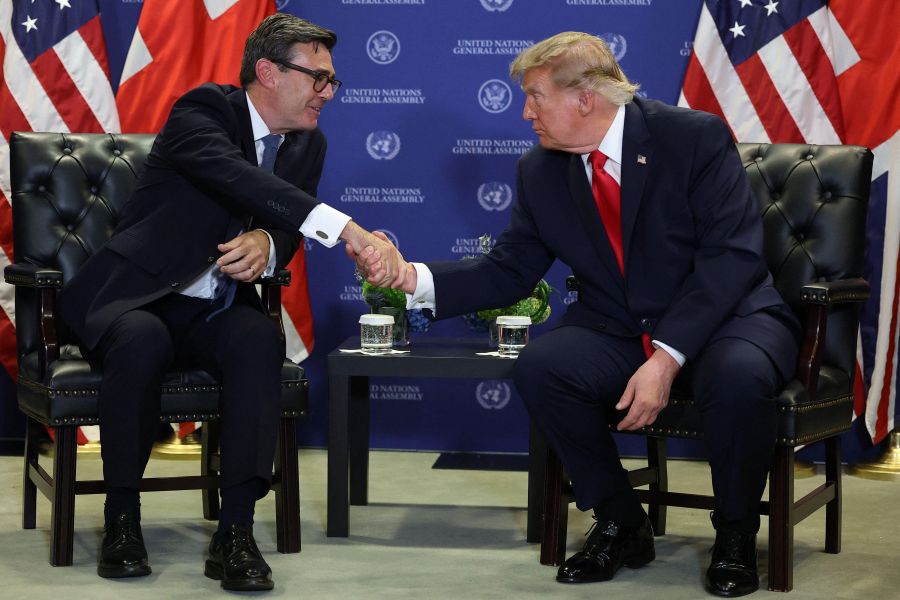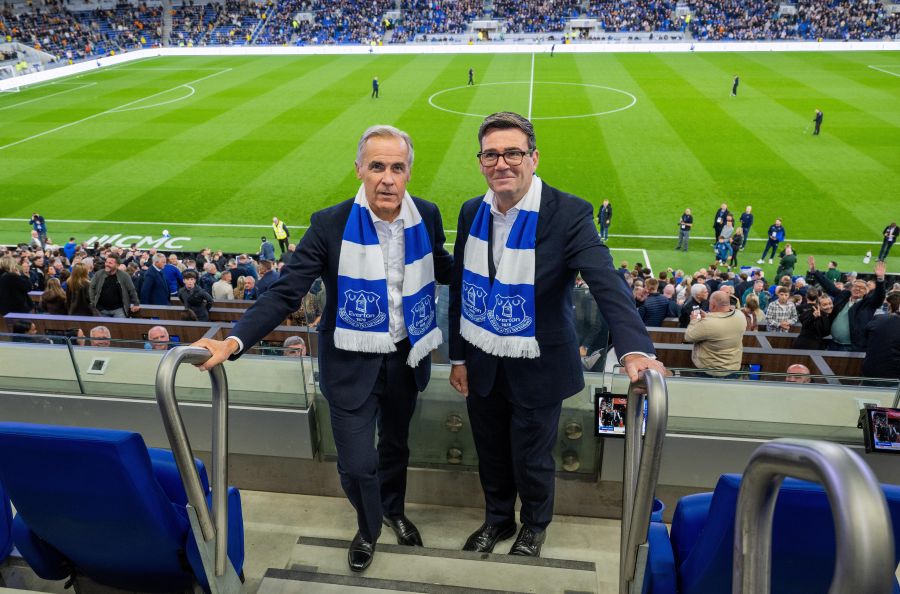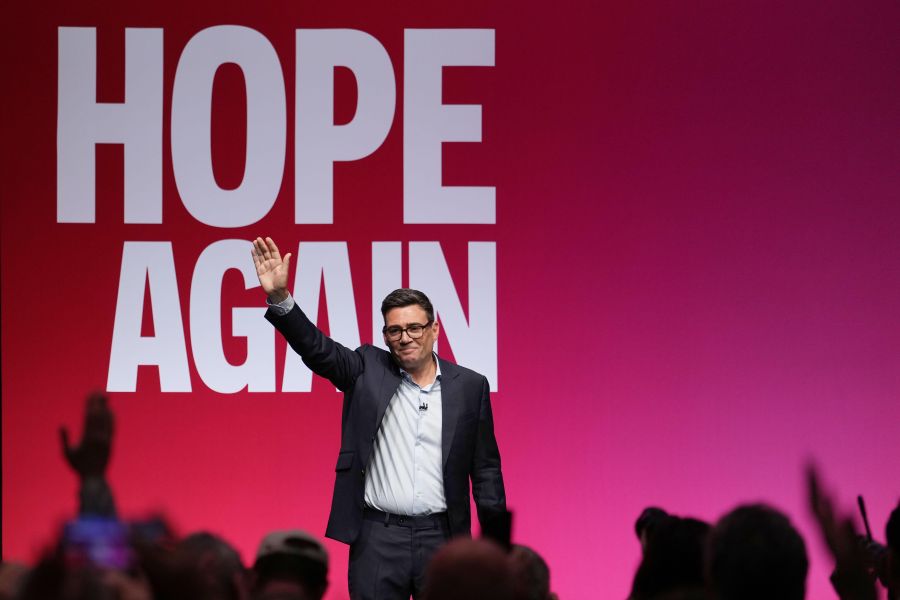
The Prime Minister addressed his first Labour Party Conference as party leader and Prime Minister on Tuesday © Associated Press / Alamy Stock Photo
Andy Burnham led his first Labour Conference in Liverpool this week, marked by his Government’s new slogan to make Britain “Hope Again.” In true Burnham style, his speech was delivered without a podium as he set out his party’s plans before the next (apparently not early) election. Promising to make the country work for people again, much like other speeches heard in Liverpool, Burnham’s speech centred around bringing back Labour values and the “Labour way.” He promised “more control of the basics so that we can make it more functional” including council powers to bring empty homes into the public housing stock, repealing the ban on public ownership of water companies introduced by Margaret Thatcher, and a publicly owned grid company. The Prime Minister also announced plans for a national commission on electoral reform in a bid to scrap the first-past-the-post system. However, it is his plans to reform the triple lock that dominated discussions, even before he took to the stage, proposing that from 2030 the state pension will rise every year by inflation or 2.5%, whichever is highest – increased if needed over time to keep pace with average worker earnings. These savings are set to go towards the creation of a new National Care Service in England. Burnham concluded his speech with an assurance that he will use the UK-EU Summit in November to lay out what he believes the “different options are for Britain’s long-term relationship with our European partners,” before launching into the traditional rendition of Jerusalem.
Other announcements at Labour Conference included (deep breath…) bringing Avanti West Coast into public ownership by Transport Secretary Heidi Alexander… new council powers over poor-quality rental homes, scrapping ground rents and support for rough sleepers by Housing Secretary Angela Rayner… £6bn for British shipyards, the return of the Union Learning Fund, expanded local apprenticeship services and National Wealth Fund support for 130,000 jobs by Chancellor John Healey… closing “bogus self-employment” loopholes by Business Secretary Jonathan Reynolds… expanding the jobs guarantee to young people with disabilities and long-term health conditions by Work and Pensions Secretary Pat McFadden… new vocational GCSEs, T and V Levels and post-16 apprenticeships by Education Secretary Lucy Powell… using utility procurement to support British jobs and strengthening the National Shipbuilding Office by First Secretary of State Louise Haigh… specialist police officers to tackle violence against women and girls and new safe and legal refugee routes by Home Secretary Shabana Mahmood… tougher community punishments, expanded drug-free prison wings and greater employment and housing support for prisoners by Justice Secretary Alex Norris… confirmation the under-16s social media ban will enter into force from March 2027 by Culture Secretary Lisa Nandy… a Champion for Unpaid Carers, a collective pension scheme for care workers and new maternity standards by Health Secretary Yvette Cooper… the Good Food Neighbourhoods Programme and £79m for nature restoration and climate adaptation by Environment Secretary Angela Eagle… devolving the Warm Homes Plan by Energy Secretary Miatta Fahnbulleh… and the national rollout of the Victim Transformation Programme by Attorney General Ellie Reeves.
65 minutes – the length of the Prime Minister’s speech at Labour Conference, which he delivered without a lectern and without any physical notes.
64% – support for Burnham’s proposed changes to the Triple Lock (compared to 15% opposition), according to an instant reaction poll by Survation following the PM’s speech.
200.01p per litre – the average cost of diesel at the pumps, reaching an all-time high. Petrol prices have also risen to 174.71p per litre.
226.1 million – passenger journeys on light rail and tram systems across England during the year ending in March 2026, a 2% decrease on the previous year which DfT attributed to a reduction in passenger journeys on the DLR.
£79m – funding for local communities to restore nature and adapt to climate change announced by the Environment Secretary this week, despite the PM’s failure to mention nature and just the one mention of “climate crisis” in his leader’s speech.
0.5% – GDP growth in Q2 2026, as the ONS revised its figures up by 0.1% from the previous estimate.
145,900 – individuals working in the UK cyber security workforce in the 2025 calendar year, up 2% compared to the year before.
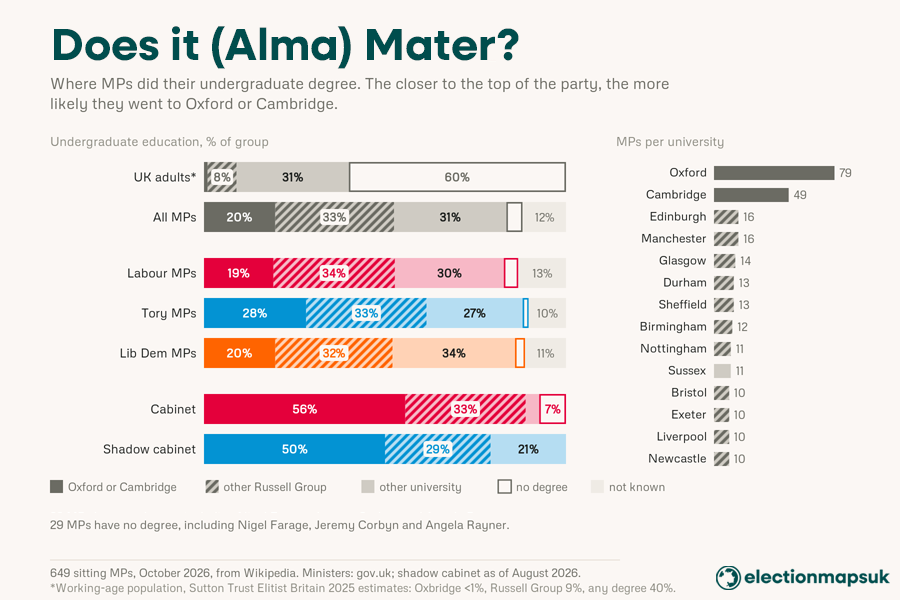
This week, I’ve investigated where each MP did their undergraduate degree, if indeed they went at all. One in five went to Oxford or Cambridge, a group that makes up less than 1% of British adults, and half went to a Russell Group university, against 9% of the public. Oxford alone has produced 79 of today's MPs – more than Edinburgh, Manchester, Glasgow, Durham, and Sheffield combined – and that’s before considering master’s degrees.
Oxbridge's grip is loosening over time, albeit slowly. Of MPs first elected before 2010, 30% went to Oxford or Cambridge. Of the 2024 intake whose university we could trace, it is 20%. The wider Russell Group share has barely moved, at around 60% in every cohort. Interestingly, Sussex is the most attended non-Russell Group University, with 11 MPs opting to study there, including the Leader of the Opposition.
Promotion is another story: the higher you look, the more Oxbridge it gets. Among Labour MPs as a whole, 19% went to Oxford or Cambridge. Among junior ministers it is 27%. In Andy Burnham's Cabinet it is 56%: 15 of the 27, with ten of those attending Oxford. Burnham himself read English at Cambridge, whilst only Alan Campbell went to a university that wasn’t in the Russell Group (Lancaster).
The Conservatives follow the same pattern. Half of Kemi Badenoch's shadow cabinet are Oxbridge graduates, against 28% of Tory MPs. And the Lib Dems are no different either, 20% attended Oxbridge, with Ed Davey among them.
Six in ten working-age adults have no degree. Among MPs, only 29 (4%) are known never to have gone to university, among them Nigel Farage, Jeremy Corbyn and Lee Anderson. In Cabinet there are two: Rayner, who left school at 16, and Chief Whip Midgley, who left home at 17 to work in a Paris bookshop.
So, does it matter where you went? For getting elected, less than it did. For getting promoted, it seems it still might.
Defence Secretary Wes Streeting braved the cold of the far north on a visit to Iceland (no, not Liverpool) to meet with representatives of the member states of the British-led Joint Expeditionary Force, a defence organisation comprising mostly Northern European nations which complements the work of NATO. Despite the JEF usually being considered a European club, one of the main items on the agenda for the delegates is Canada’s bid to join the grouping. Ahead of Streeting’s trip, First Sea Lord General Gwyn Jenkins also visited Lithuania, Latvia, Finland and Estonia to drum up support for his ‘Northern Navies’ initiative, intended to strengthen maritime cooperation among JEF nations.
The G7 convened a virtual meeting to discuss energy security, with Foreign Secretary Ed Miliband taking part. The statement confirmed they would coordinate the release of up to 100 million barrels of diesel and crude oil to ‘begin immediately over 4 months’.
Meanwhile, Victims, Violence Against Women and Girls and International Justice Minister Alex Davies-Jones attended the UN Crime Congress, meeting with UN Office on Drugs and Crime Executive Director Monica Juma. The pair discussed the problems posed by online technology and cybercrime for protecting women.
Tom Warth was permanently appointed Chief Operating Officer of the Planning Inspectorate, having served as interim COO for the past eight months. Warth has held a number of roles at the Inspectorate since originally joining as an enforcement case officer, including as Head of the Planning and Environmental Appeals Service.
Andy Lewis was appointed Chief Inspector of Rail Accidents, replacing Andrew Hall, who will retire after almost five years in the role. Lewis will take up the position at the Rail Accident Investigation Branch in November.
On a similar track (see what we did there) Paul Smith was appointed Chief Executive of the Office of Rail and Road (ORR) and will take up the role in January. Smith joins from regulatory and competition advisory firm Fingleton and previously held senior roles at the Civil Aviation Authority, Australian Energy Market Commission and Payment Systems Regulator. He will replace interim Chief Executive Feras Alshaker.
Andy Burnham appointed Leah Kreitzman as his Advisor on Marketing Communication Processes & Strategy at 10 Downing Street. She will lead a review recommending a new operating model for how No.10 works with the Government Communication Service on marketing and campaigns.
Michael Seals was reappointed Chair of the Animal Sentience Committee, extending his tenure until October 2028.
Lea Paterson and Matthew Tobin were appointed Non-Executive Directors of the Financial Conduct Authority, both beginning three-year terms this week.
With the Holborn and St Pancras by-election under a week away, Green Party leader and candidate Zack Polanski delivered a speech at the party’s conference today. His headline announcement was a call to cap private rent increases for three years at the lowest of inflation, wage growth or 2%, before introducing a permanent National Fair Rent Guarantee. Seeking to reassert the Greens’ reputation for, well, being green, Polanski also called for an immediate clean energy revolution, including improvements to energy efficiency, an expansion of community energy and a ban on new oil and gas licences.
Plaid Cymru’s Conference also began today, with Welsh First Minister Rhun ap Iorwerth delivering his speech, calling on Andy Burnham to deliver a “new deal” and arguing that Plaid had a mandate for having more powers devolved from Westminster. He also said that “rebuilding” the NHS was the “biggest challenge”, noted that tackling poverty was a “guiding mission”, and confirmed support for a Community Right to Buy scheme. Next on the conference circuit are the Conservatives, who go to Birmingham and begin theirs on Sunday.
Diesel prices hit a record high this week, topping £2 a litre for the first time in the UK after US President Donald Trump revealed he was considering a ban on American diesel exports. The announcement prompted the UK and EU to discuss drawing on emergency stockpiles, while Trump suggested he could also ask European countries to release their reserves. On Friday the G7 confirmed they would coordinate the release of up to 100 million barrels of diesel and crude oil.
The next stage of the Early Release Scheme took effect this week, with around 700 offenders released earlier than originally envisaged. Around 2,550 prisoners are expected to be released under the scheme by the end of 2026 as the Government seeks to ease pressure on prison capacity. It said those released would face “the toughest supervision in British history”, including electronic monitoring, exclusion zones and bans from pubs, clubs, football matches and public events.
Neurodivergent people can flourish in work when given ‘the right support based on their needs rather than a diagnosis’, according to the Expert Academic Panel on Neurodiversity’s Report and Recommendations which has set out how best to support neurodivergent employees in the workplace, highlighting how greater employment participation has the potential to ease pressure on health and welfare services and support economic growth.
VAT on household electricity bills was removed this week, keeping the Energy Price Cap £45 a year less than it would have been as part of measures to give families ‘breathing space’. The Government expects suppliers to pass the cut on to customers on fixed tariffs too, with savings depending on energy use.
SMEs are to receive £2,000 for every new, eligible young apprentice they take on, to be paid in two instalments: £1,000 after the apprentice completes their first 90 days, and the second £1,000 after the one-year mark, or after 242 days for shorter apprenticeships and foundation apprenticeships. The payment is available to employers that do not pay the apprenticeship levy and will be passed on automatically through training providers.
Applications have opened for the British Industrial Competitiveness Scheme, giving more than 10,000 businesses the opportunity to cut their energy costs by up to 25%. The scheme is targeted at manufacturers, particularly those operating in the Modern Industrial Strategy’s eight high-growth sectors and the foundational industries that support them.
The Government is exploring buying new trains outright following the publication of the rolling stock and infrastructure strategy which has set out how Great British Railways will assess whether direct public ownership, leasing or other financing arrangements offer the best value for taxpayers and fare payers. The strategy also sets out coordinated investment in trains and infrastructure, more standardised fleets and the gradual replacement of diesel trains with cleaner technologies.
Nothing’s free anymore, except entry to the world-class 15 national museums in England, after the Government confirmed universal free admission would continue. Visitors, both from the UK and abroad, will continue to have free entry to venues such as the British Museum, Natural History Museum and Tate Britain. The confirmation followed a report published in December which explored the potential of charging overseas visitors.
What happens when football, diplomacy and Manchesterism meet? Comments from the Prime Minister branded “out of touch” by opposition parties, followed by a swift Downing Street clarification that Andy Burnham was not suggesting Manchester City should be “above the rules”. Burnham had said he would be “really concerned” if the club’s owners walked away should City be found guilty of all charges relating to alleged breaches of financial rules between the 2009-10 and 2017-18 seasons, seemingly diminishing the seriousness of the allegations.
Watch out criminals, Bobby J is back on the beat. Having already taken the fight to fare dodgers on the Tube, Robert Jenrick has now turned his attention to another scourge of modern Britain – shoplifting. Spotting a man walking out with a bottle he hadn’t paid for, Jenrick intervened, confiscated the contraband and explained that shoplifting pushes up prices for everyone else. But in perhaps the most British shoplifting exchange we’ve seen yet, when Jenrick asked whether he should take the bottle back to the shop, the man simply replied, “please”, prompting a “thanks” from Jenrick. Crime may not pay, but apparently good manners remain free. H/t Reform UK’s Treasury Spokesperson/vigilante himself, Robert Jenrick.
Aviation Minister Keir Mather’s first morning round got off to a flying start, although an unfortunate backdrop caused a little turbulence. Broadcasting from Manchester Airport, Mather stood with a plane behind him, its airline’s name and logo emblazoned clearly for all to see. Unfortunately for Mather, it was that airline – yes, the one that also does telecoms, hotels and gyms. The accidental positioning didn’t fly under the radar, with his ministerial colleague Michael Shanks helpfully pointing out, ‘you always enjoy your second morning round more than your first’. One morning round down, and already plenty of baggage. H/t Keir Mather for sharing his experience.