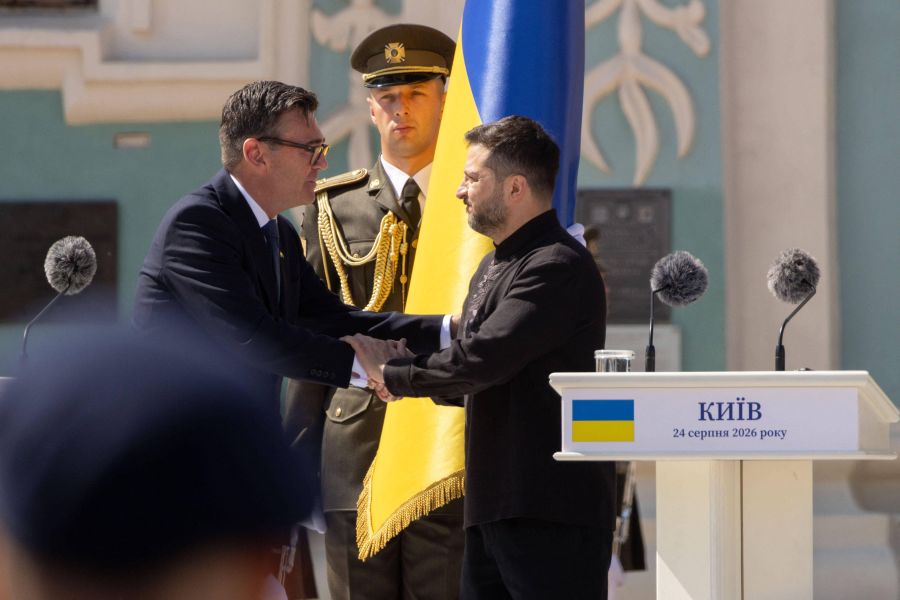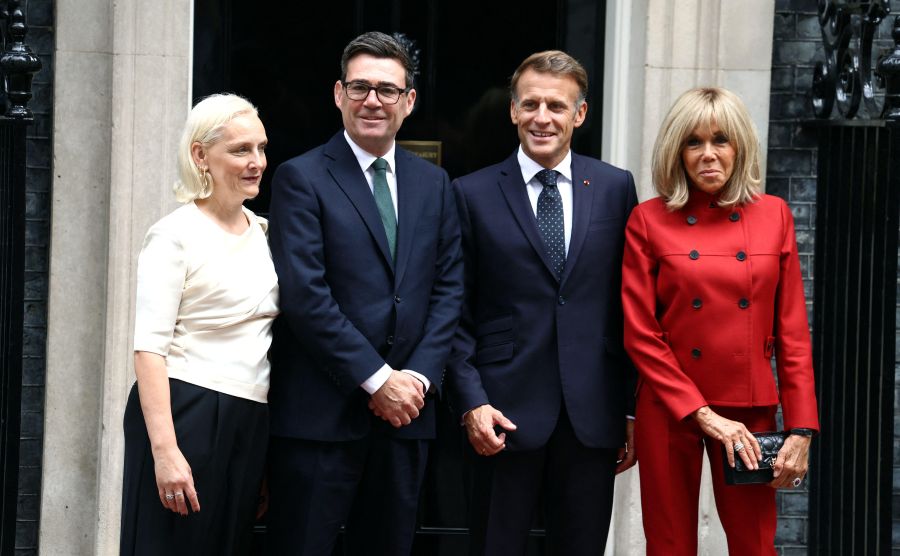
Prime Minister Andy Burnham and his wife Marie-France van Heel hosted French President Emmanuel Macron and his wife Brigitte Macron at Downing Street this week, marking Burnham’s first time hosting a world leader at the residence. © Sipa US / Alamy Stock Photo
Parliament returned with a bang on Tuesday, as, ahead of Andy Burnham’s first appearance at the despatch box as Prime Minister, it was announced that his predecessor, Keir Starmer, would be resigning from Parliament, paving the way for a by-election in the heart of London. Not one to let the news sit for long, Burnham took centre stage in Parliament to deliver a mammoth ministerial statement on the direction of his government on the first day back from Summer Recess. Speaking for over 20 minutes, he covered a broad range of topics, including: affirming that national defence was his Government’s first priority; assuring that fiscal responsibility would be the “bedrock” of the Government’s approach; pledging to give people and places greater ownership and control; confirming that the Government’s ‘Ten-Year Plan for Britain’ would be published later this year, setting out plans for stronger public control over essential services; extending devolution to other parts of England and increasing local control over investment strategies; and backing mayoral control over technical pathways and work placements. Badenoch, getting a preview of Burnham ahead of their scheduled PMQs clash the following day, questioned how the Government would address the “enormous hole” in the defence budget and called on it to get to grips with welfare. With questions from backbench MPs, Burnham was in the Chamber for a total of 3 hours and 24 minutes (you could watch Series 1 and 2 of The Thick of It in that time, and still have 30 minutes to spare). Less than 24 hours later, Burnham was back at the despatch box for his first PMQs, where Badenoch asked him to name a “single spending request” he was not inclined to agree with, claiming that he “did not say no” to a single one during his statement the previous day. It was a week of firsts for Burnham, who later hosted his first world leader, Emmanuel Macron, at No. 10, although that visit was soon overshadowed by other headlines…
The conference season has begun, with Reform UK opening proceedings in Birmingham yesterday to set out a series of policies while finding itself under scrutiny for its own affairs. Richard Tice used Reform’s ‘Business Day’ to unveil proposals to loosen planning rules, including removing affordable housing requirements on most brownfield sites, making permitted development more permissive and giving councils a year to produce local plans. He also called for the £250bn surplus in the Local Government Pension Scheme to be turned into a British Sovereign Wealth Fund, arguing it could invest in housing, infrastructure and British businesses. Robert Jenrick also promised more than £100bn of spending cuts in Reform’s first 100 days in government, with the money going towards reducing borrowing and tax cuts. Announcements were, however, quickly overshadowed by an undercover investigation into Reform’s fundraising, which has led to Farage’s top aide Dan Jukes and head of policy James Orr stepping down, after they appeared in footage discussing how a £500,000 foreign donation could be arranged. The Electoral Commission has also since said it is in contact with the Metropolitan Police. Nevertheless, the show goes on, and today Zia Yusuf has returned the focus to familiar Reform territory, promising to end the early release scheme, rapidly expand prison capacity and launch the “largest mass deportation” operation in modern history, alongside pledges to deploy the Royal Navy to stop Channel crossings and rearm the military.
2 – number of senior Reform UK members who resigned this week following allegations of breaches of electoral law regarding the acceptance of donations, following an investigation by Verbatim on Thursday.
7 – number by-elections that have been triggered since the 2024 election, after Keir Starmer announced his resignation this week.
125 – total number of questions that the Prime Minister answered on Tuesday during his first appearance as PM in the Commons.
658 – number of businesses named as not paying their staff minimum wage, according to Government figures this week.
£400m – amount pledged by the Government as a loan for the Tropical Forest Forever Fund, remaining subject to final due diligence.
68.3m – length of the Bayeaux Tapestry, which opened to the public at the British Museum this week.
38.1°C – peak temperature measured in the UK this summer, after the Met Office confirmed it was the hottest on record.
2 – number of Early Day Motions made by MPs honouring Dolly Parton, plus another marking the 30th anniversary of Dolly the Sheep, who was named after her.
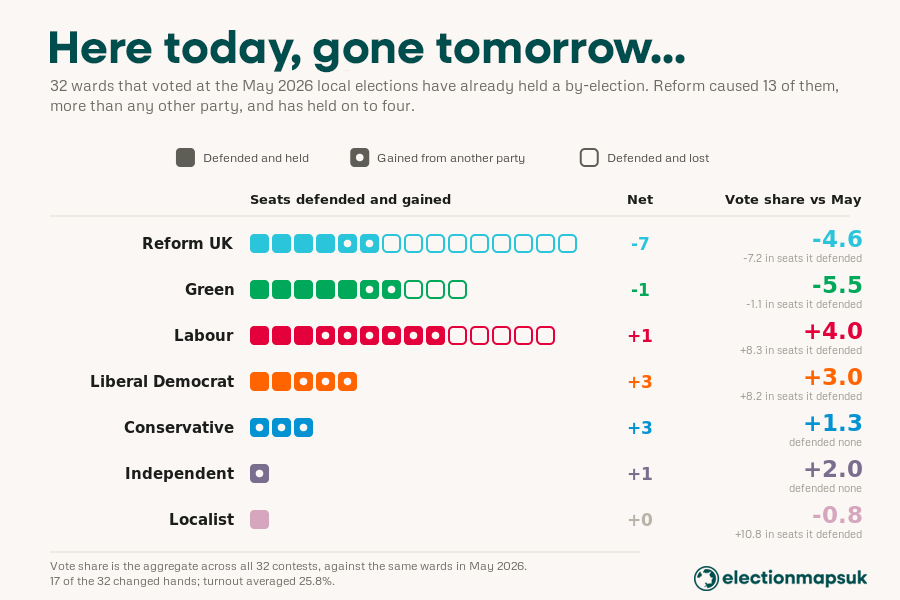
In a week where the former Prime Minister resigned his seat in parliament, I thought I'd look at other elections being held much earlier than planned. Four months on from the May 2026 local elections, constituents in 32 of the wards that voted in them have already been dragged back to the polling booth.
Reform defended 13 of those 32 by-elections, more than any other party, from a party that has been in office since May. It has held just four.
To compare, the Greens defended eight and held five. Labour defended eight and held just three (though this is complicated slightly by the outgoing councillor being elected on a previous cycle in a multi-member ward) - arguably more importantly for the national picture is that it has increased its own vote share in those wards by 8.3 points on what it polled in May. The Liberal Democrats defended two, held two, and went up 8.2 points. Reform's own share in the seats it was defending fell 7.2 points.
Seventeen of the 32 seats have changed hands. On net, the Conservatives are up three, the Liberal Democrats up three, Labour up one and independents up one. The Greens are down one. Reform is down seven.
The interesting part is not that Reform is losing, but the shape of how it does. Across its 13 defences, on aggregate, Reform's vote fell 7.2 points whilst its best-placed rival's rose 16.5, with other parties falling by 9.3. That is the imprint of tactical voting: the anti-Reform vote consolidating behind whoever is best placed to beat them.
Who that competitor has been has varied across the political spectrum. Reform lost two Thurrock seats and Penistone East to Labour, Almondbury and St Neots Eynesbury to the Liberal Democrats, and Rayleigh West, Sweyne Park and Old Catton to the Conservatives.
The same logic shows up on the other side of the ledger. In the 18 wards defended by Labour, the Greens or the Liberal Democrats, the incumbent progressive party actually gained 4.1 points on average while Reform slipped 1.8. Parties that caused a by-election are – perhaps surprisingly – not being punished for the inconvenience.
On the whole, the average defending party lost a mere 0.3 points on its May score but held on to the seat just 47% of the time, owing to the opposition block consolidating around one party - particularly in the case of Reform defences.
Of course the usual caveats apply – the pattern is suggestive rather than settled, and by-elections attract campaigning intensity that a general election would spread thinly.
Turnout in these seats has averaged 25.8%, compared to 30.3% in wards lasted contested in 2022-25. Asking people to vote twice in four months clearly isn't particularly welcomed... Who'd have thought?!
The Prime Minister welcomed President Macron to Downing Street as part of his visit to the UK to mark the arrival of the Bayeux Tapestry. Downing Street was keen to emphasise that their bilateral focused on more modern Channel crossings of the small boat variety, as well as on UK-EU ties, support for Ukraine, and the conflict in the Middle East.
Foreign Secretary Ed Miliband attended a meeting of EU foreign ministers in Dublin, during which he held a bilateral with his German counterpart to offer the UK’s solidarity after Germany blamed Russia for an attempted drone attack at Leipzig airport. The FCDO also summoned the Russian Chargé d’Affaires to condemn the attack ‘in the strongest terms.’ Meanwhile, Miliband’s counterpart, the newly appointed Shadow Foreign Secretary Tom Tugendhat, undertook a trip to Taiwan where he threw down the gauntlet to Miliband to ‘look for real partners and visit Taiwan, or continue turning to China.’
Not to be outdone by the PM, Nigel Farage welcomed his own French ally to the country with the appearance of Jordan Bardella, leader of France’s National Rally, at Reform’s conference. The two signed a memorandum of understanding to stop small boat crossings, with Bardella standing by rather awkwardly while Farage trumpeted that all crossings would be intercepted and dumped back on French beaches.
European Relations Minister Hamish Falconer took a trip to Austria, where he joined his counterparts from Austria, Ireland and Poland to discuss Europe’s strategic future. Meanwhile, Development Minister Kirsty McNeill continued her tour of East Africa with a meeting of Ethiopian ministers and African Union leaders in Ethiopia’s capital, Addis Ababa; and Foreign Minister Baroness Winterton visited Kathmandu to support Nepal, where she received an update on the UK’s efforts to support the country following the recent horrific flooding.
Foreign Minister Uma Kumaran hosted Caribbean High Commissioners and Ambassadors at the FCDO to discuss building relations on the ‘deep cultural ties’ the UK has with the region.
Defence Readiness and Industry Minister Luke Pollard met with the Japanese Ambassador to discuss the UK-Japanese-Italian programme to build the next generation fighter jet.
Keir Starmer joined Boris Johnson in quitting Parliament after being turfed from office by his own MPs, announcing he will stand down to focus on ‘international affairs.’ Green Party leader Zack Polanski, who has always insisted that he would only stand in a London by-election, confirmed his intention to stand (pending local party association approval), and senior Reform figure Zia Yusuf is also rumoured to be considering a run.
Conservative leader Kemi Badenoch nabbed the limelight from the PM as the summer recess came to a close by undertaking a reshuffle of her shadow cabinet (although the news that James Cleverly was standing down as Shadow Housing Secretary to seek the Tory candidacy for the next London mayoral election may have forced her hand). Top changes saw Mel Stride replaced by Andrew Griffith as Shadow Chancellor and Tom Tugendhat moved into the FCDO, as well as 2024 MP intake such as Katie Lam and Harriet Cross being tapped to lead the shadow Housing and Scotland teams. Click on the image below to download our latest hi-res organogram:
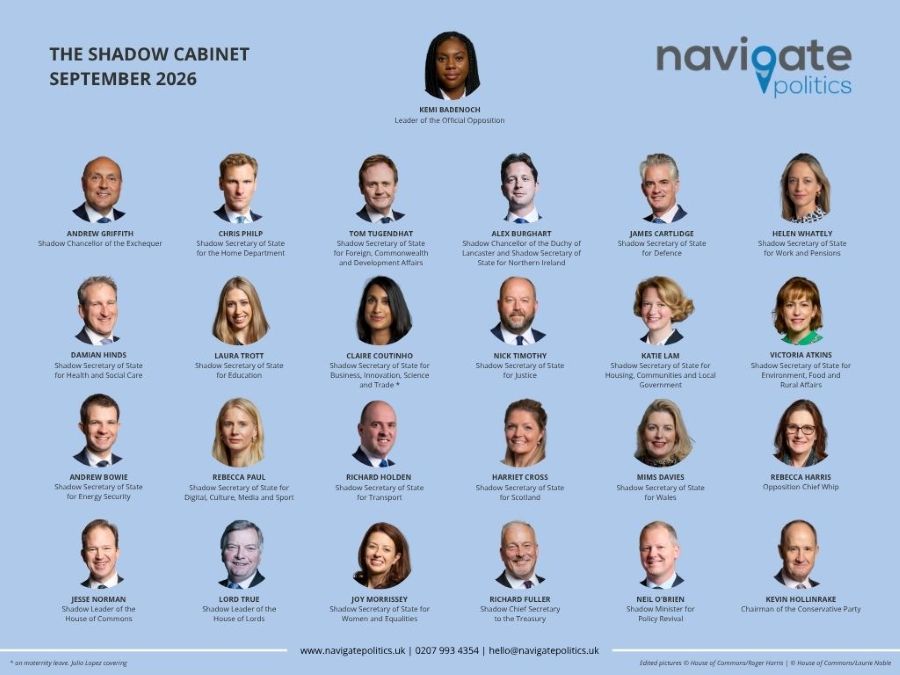
Below the shadow cabinet, it was all change at the junior shadow ministerial level, with the following new additions and changes to the team:
Priti Patel was demoted to International Secretary (whatever that means)…Ben Spencer and Charlie Dewhirst joined the shadow Cabinet Office, with Spencer taking responsibility for AI and Dewhirst also joining the shadow Northern Ireland team… John Cooper was made the Shadow Exchequer Secretary, while James Wild was moved to the shadow Culture team… Peter Bedford became Shadow Pensions Minister… Bradley Thomas and Peter Fortune were made Shadow Business Ministers… Alicia Kearns was given a job in the shadow Foreign Office (in addition to her shadow Home Office role) and was joined by Lincoln Jopp… David Reed was given roles in both the shadow Foreign and Defence teams, with Stuart Anderson and Ben Obese-Jecty also joining Defence… Blake Stephenson and Sarah Bool became Shadow Home Office Ministers, with Bool’s role also taking her into the shadow Justice team… Joe Robertson was made a Shadow Work and Pensions Minister… Luke Evans and Ashley Fox became Shadow Energy Ministers… Rebecca Smith and Patrick Spencer joined the shadow Education team… Aphra Brandreth became a new Shadow Environment, Food and Rural Affairs Minister… Alison Griffiths joined the shadow Transport team…and Lewis Cocking became a Shadow Housing, Communities and Local Government Minister.
Following the elevation of their incumbents to government, Rachel Blake, Jonathan Brash, Abena Oppong-Asare, Alan Strickland and Catherine West have thrown their hats into the ring to become the new chair of the Housing, Communities and Local Government Committee. Catherine Atkinson, Janet Daby and Sarah Russell are seeking to lead the Justice Committee, and Olivia Bailey, Anneliese Dodds and Preet Kaur Gill are contesting the Women and Equalities Committee. The elections will take place on 14 September.
Alyn Smith was made the Scottish Government’s new Minister for Innovation, Technology and Tertiary Education following the resignation of Ben Macpherson last week.
Adam Pile was appointed British High Commissioner to Mozambique.
Leila D’Aronville and Lizzie Crump have been appointed the Government’s Freelance Champions to advocate for the nation’s 700,000 self-employed in the creative industries.
It was confirmed this week that Andy Burnham has yet to commit to increasing defence spending to 3% of GDP by 2030, with his government instead promising a plan next spring to reach 3.5% by 2035. Kemi Badenoch accused him of “kicking defence spending into the long grass”, while setting out her own plans for 3% by 2030 the very next day. She outlined that £4bn from housing benefit reforms, £1bn from removing the Motability VAT exemption and ending the Chagos Islands deal would complete the party’s costings for the increase.
Kemi Badenoch also carried out a significant reshuffle of her shadow team, replacing Sir Mel Stride as Shadow Chancellor with Andrew Griffith and appointing Claire Coutinho as Shadow Business Secretary, who will begin after her new role after maternity leave.
The North Sea debate was back in the headlines this week, as the Government is expected to approve the Jackdaw gas field off the coast of Aberdeen later this month following a consultation into its climate impact. The project, originally approved in 2022 but then overturned on legal grounds, could begin supplying gas to UK homes this winter. Adura, which operates both Jackdaw and Rosebank, estimate that Jackdaw could produce 35.8 million tonnes of carbon over its 11-year lifetime. The decision on Rosebank is still being considered.
Around 700 eligible offenders will be released from prisons in England and Wales on 1 October as part of the Government’s revised early release scheme, with around 2,550 expected to be released by the end of the year. The start date has been pushed back by a month, with manslaughter, death by dangerous driving, rape, grooming and child sexual offences excluded from the scheme. The changes have come as prisons continue to operate at around 97% capacity.
The UK announced its intention to invest £400m into the Tropical Forests Forever Facility following its launch at COP30 in Brazil in November last year. The UK initially did not commit any funding, instead helping to draft the framework and reiterating its support for it on numerous occasions. The Government believes this investment displays their commitment to climate finance by acting as an investor instead of a donor.
The UK’s accession to the Comprehensive and Progressive Agreement for Trans-Pacific Partnership (CPTPP) entered into force after Canada ratified it on Tuesday. This will mean that British businesses can ‘access the full benefits of the agreement across all 11 CPTPP Parties' which includes access to Canadian tariff rate quotas covering dairy products; increased flexibility for short-term business travel to the country; new digital trade commitments; and access to new public procurement opportunities.
Mayor of London Sadiq Khan launched a refreshed Violence Against Women and Girls Strategy for 2026-2029, set to be backed by an investment of £318m. The investment includes a £15.6m fund that will give women and girls a voice in transforming public spaces for the first time ever, which could include a range of improvements such as 'better lighting and CCTV, removing blind spots and opening up spaces to make places feel safer, more inclusive and better used by a wider range of people.' The strategy also includes £6m for tackling tech abuse crimes, £3m to help victims in removing barriers to employment and £2.4m to support victims of child sexual exploitation.
The Argentine President announced his plans to impose sanctions on Britain. The sanctions are aimed at British company Rockhopper Exploration and Israeli company Navitas Petroleum over oil drilling in the Falklands as part of intensified plans to bring the Falklands under Argentine control. Javier Milei argued that the Sea Lion oilfield, where exploration work is set to begin, is a “clear and present danger” and further argued the “winds of change” favoured Argentina’s claim to the islands. This comes shortly after US President Donald Trump suggested that Britain’s lack of help during the Iran war would mean he would not offer up US help to support Britain should any invasion of the Falklands occur.
New school uniform rules came into force in England as part of Government pledges to tackle the cost of living. The new rules will mean that uniforms are limited to three items with a school logo, with the government expecting it to save some families £50 per child. The Department for Education’s own research found that in 2023/24 the average total cost for a child’s school uniform was just under £250.
The first young people in Wales supported by the Jobs Guarantee scheme have begun work this week, with the scheme set to support 3,500 young people into work. The Government are fully funding up to 25 hours of paid work for six months as part of work to drive down the number of NEETs across the country.
£52 million was released to Scotland's regional leaders as part of the £140 million Local Growth Fund initiative. Funding was targeted at areas with the lowest household incomes and will support local projects including infrastructure, high-growth businesses, skills and high streets, with regional leaders given the responsibility for deciding how it is spent.
With Parliament returning from Summer Recess, much of the Commons’ business throughout the week consisted of ministerial statements setting out announcements made over the summer, most notably Burnham’s statement on the direction of the Government. He followed up his statement with his first PMQs session the next day, which Leader of the Opposition Kemi Badenoch opened rather flirtily by congratulating him on his stamina…
This week also saw Ed Miliband and Stephen Kinnock answer questions for the first time in their new roles as Foreign Secretary and Wales Secretary respectively, while the Representation of the People Bill – which will extend the right to vote to 16 and 17-year-olds – completed its remaining stages in the Commons. Meanwhile, in the Lords, the Cyber Security and Resilience Bill and the Armed Forces Bill both began their committee stages, the Public Office (Accountability) Bill passed second reading, and the Social Housing Bill passed third reading.
When Nigel Farage defeated intergalactic space warrior Count Binface of Sigma IX at the Clacton by-election, he might have assumed his encounters with extraterrestrial life were over. Alas, the cosmos has followed him to Reform UK Conference at Birmingham NEC. The party hoping to form the next government is sharing its venue with Peppa Pig’s Space Adventure, alongside other attractions including Tutankhamun: The Immersive Exhibition. In a particularly helpful piece of conference signage, both Reform VIPs and those attending Peppa’s Space Adventure were being sent in the same direction. Whether everyone ended up at their intended event remains unclear. H/t Alys Denby for the photo.