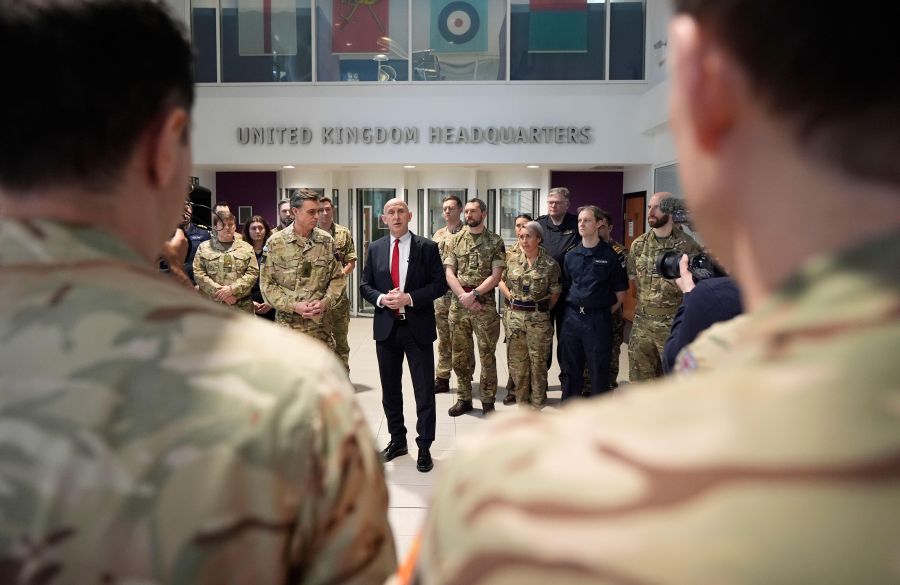
Defence Secretary John Healey at the Permanent Joint Headquarters in Northwood speaking to service personnel after receiving an update on operations in the Middle East. © PA Images / Alamy Stock Photo
The first tranche of the Peter Mandelson papers were released by the Government this week with political journalists and commentators racing to find the juiciest bits in the 147 pages dropped on the Government website shortly after the weekly PMQs. In a nutshell it was revealed: the PM was informed Mandelson’s appointment as US Ambassador carried a “general reputational risk” due to his links to Jeffrey Epstein; the National Security Adviser called the appointment process “weirdly rushed” and raised his concerns to the PM’s then Chief of Staff Morgan McSweeney; Mandelson received security briefings weeks before his clearance came through; and that when it all collapsed in September last year Mandelson asked for a £547,000 payout (the remainder of his four-year fixed term appointment salary) and stated his “chief concern” was “arriving in the UK with the maximum dignity and minimum media intrusion” noting this would be “to the advantage of all concerned”. Kemi Badenoch seized on the fact that the Prime Minister’s response section of the Box Note, providing advice ahead of Mandelson’s appointment, was empty, calling it a “cover-up” and claimed “something very dodgy has happened”. Having apologised for appointing Peter Mandelson and admitted to knowing about his post-conviction contact with Epstein weeks ago, Starmer managed to get ahead of the situation a little… but past denials by No.10 that the appointment was rushed and further questions about the PM’s judgement, have done little for his reputation.
The US and Israeli bombardment of Iran continued this week, with the impact being felt domestically as the price of oil rocketed – increasing by 40% in a month. This has been reflected in a price hike at the pumps – with the cost of diesel increasing by 11% over the last four weeks. The appointment of the new Ayatollah – Mojtaba Khamenei, son of the late Ayatollah Ali Khamenei – suggests the war with Iran isn’t ending anytime soon, despite President Trump’s statement this week that “we won. The first hour, it was over”. In a press conference this morning, US Secretary of War Pete Hegseth stated the US would undertake the “highest volume of strikes” against Iran today, adding that Iran’s missile supply is down by 90%. UK pilots have flown over 300 hours so far and, after criticism of its delayed departure, a Type 45 destroyer – HMS Dragon – is on its way to RAF Akrotiri in Cyprus. UK troops in Iraq also shot down two Iranian drones on Wednesday, but a number of successful strikes injured US personnel, and four other US troops were killed in a plane crash. Back in the UK, Starmer used PMQs to claim the Conservatives and Reform had U-turned on their support for the war, but refused to be drawn on whether fuel duty will rise in September as previously planned. With the Strait of Hormuz closed in all but name, Downing Street will be praying oil tankers begin moving again as quick as possible.
$100 – the price for a barrel of crude oil jumped past $100 on Sunday night for the first time since the beginning of Russia’s invasion of Ukraine in 2022.
1,100 – children have been killed or wounded since the US-Israeli strikes on Iran began, according to Unicef.
>800 – more amendments to go on the Terminally Ill Adults Bill, despite already being eleven days into committee stage in the Lords.
30 years – since the Dunblane massacre, in which 16 children and one teacher were killed at Dunblane Primary School, which led to a ban on handguns the following year in Scotland, England and Wales.
37 million – people attended theatres across the UK in 2025, with the West End alone welcoming a record-breaking 17.64m theatregoers.
£937m – in new Irish investment into the UK from 15 companies, unveiled as the PM attended the second UK-Ireland Summit in Cork.
0% – monthly GDP growth in January, rising to 0.2% when taking into account growth in the three months to January.
The Government announced their plans to overhaul the UK’s nuclear energy, speeding up the development of nuclear power by cutting regulations, costs and bureaucracy. The plan will deliver the 37 recommendations of the Fingleton Review, with reforms expected to be completed by the end of 2027. Further innovation is set to be unlocked as over 500 doctoral students will be trained at universities across the UK, 7 research programmes with £65.6 million of funding will be backed and the Defence Nuclear Enterprise is projected to support 65,000 highly skilled, well-paid jobs by 2030.
The Department for Education announced the introduction of V-Levels, from 2027 to enhance the options available to young people post-16. V-Levels will sit alongside A-Levels and T-Levels as new Level 3 qualifications offering a vocational pathway for students still undecided on where they'd like to specialise. The first rollout subjects will be in Digital, Education and Early Years, and Finance and Accounting, with more to follow over time. Further pathways have been created at Level 2 (GCSE Level) with occupational and further study pathways to better support those at this level.
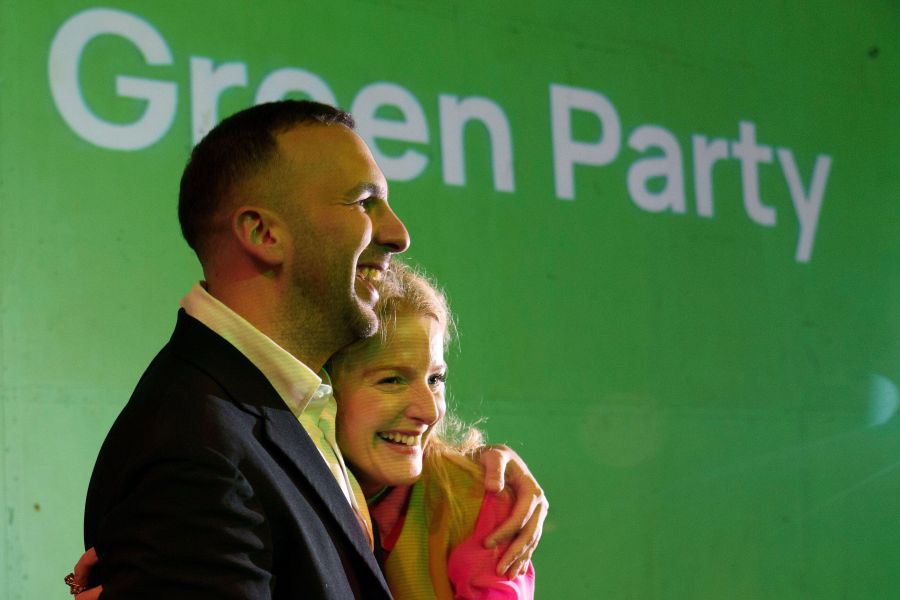
Parliament marked International Women's Day, with a debate in Government time, focusing on ways to progress women's rights and furthering action on violence against women and girls. In a moving speech Home Office Minister Jess Phillips continued her tradition of reading aloud the names of the 107 women killed by a man last year in the UK and newly elected Green MP Hannah Spencer delivered her maiden speech, recognising the women that made it possible for her to be in Parliament today.
Reform UK delivered a press conference at a petrol station in Derbyshire where they offered a 25p discount on petrol and diesel and pledged to stop the planned 5p fuel duty increase. Their plans to do this (and raise the £13bn a year needed to do so) would be funded by the cutting of net-zero initiatives including removing grants for heat pumps, scrapping funding pledges for carbon capture and storage, and removing electric vehicle subsidies.
The CMA announced new plans to step up their monitoring of petrol and diesel prices with new concerns that the conflict in the Middle East is causing profiteering among fuel retailers as the wholesale price of gas increases and continues its volatility. The watchdog said it would require firms to provide their revenue, costs and sales data in order to accelerate the review of the fuel industry that it started a couple of weeks ago when the conflict began. This has come as new figures published by the RAC on Thursday showed that the average petrol price has increased by 5.5% (roughly 7p per litre) and the average diesel price rose by 11% (almost 16p per litre) since the first airstrikes were launched a fortnight ago.
Plans to better protect candidates from abuse, intimidation, and violence ahead of the May local and devolved elections were unveiled by Security Minister Dan Jarvis. He confirmed that a new ‘threat assessment centre’ and ‘national police unit’ will be established this month to target offenders who threaten or harass candidates, bringing together specialist officers and intelligence experts to monitor reports of abuse from across the UK and identify repeat offenders. This will be built on the existing scheme that is designed to protect MPs, broadening these protections to anyone running for an elected office.
Hundreds of women will get new opportunities in tech as the Government announced a new programme supporting 300 tech roles across the country. This announcement came as the UK economy is found to be losing an estimated £2.5 to £3bn every year due to women leaving the sector, according to a joint report from We Are Tech Women and Oliver Wyman, which found that between 40,000 and 60,000 women leave tech roles every single year. Female software developers will also be supported to return to the workforce in senior roles through a new returnship jobs scheme, aimed at those who have been out of work for 18 months or more.
The leader of Redditch Borough Council’s Conservative group, Matt Dormer, was suspended by the party after he was linked to a potential defection to Reform UK. This has further depleted the Tory ranks at the Labour-led authority, with the Conservative group now holding just 4 of the 27 seats on the council. The Chair of Redditch County Conservatives confirmed that a new leader will be elected in accordance with their internal procedures, with Dormer himself refusing to comment on the situation at the moment.
Unite the union voted on Wednesday to cut its affiliation fee to Labour by an enormous 40% in a rebuke to the Government’s response to the Birmingham bin strikes. The move will amount to a £580,000 cut from Unite’s existing £1.45m funding for Labour, amidst a souring of relations between the union and the party. Unite conspicuously withheld donations from Labour’s 2024 General Election campaign and did not endorse the manifesto upon which it was elected.
The publication of a leaked No.10 memo urging against an ‘overly deferential’ approach by central government towards devolved nations has sparked uproar among the Scottish and Welsh nationalist parties. The memo, written in December, cautioned ministers against being too shy when it came to making decisions and spending cash in Wales and Scotland, ‘even when devolved governments may oppose this.’ Plaid Cymru leader Rhun ap Iorwerth accused the Government of “dealing with devolution in bad faith”, while the SNP’s Stephen Flynn raised the issue during PMQs on Wednesday.
The last hereditary peers will be leaving the House of Lords after the House of Lords (Hereditary Peers) Bill was passed on Tuesday. The Bill will bring an end to over 25 years of stop-start efforts to curtail the number of hereditary peers, most of whom were removed in 1999, but 92 persisted until now under a compromise arrangement. To lessen the Bill’s sting for the Conservatives the Government compromised once again, with reports suggesting that several hereditary peers will be offered life peerages. Some of the present hereditary peers have complained that the Bill will fundamentally alter the character of the upper chamber, in which hereditary peers have sat for a thousand years.
It was a statement heavy week on the green benches, with a steady run of updates dominating Commons proceedings. The week began with an Urgent Question on immigration policy changes before Ministers delivered back-to-back statements on the economic and defence implications of the Middle East conflict. A further statement on the Government’s ‘Protecting What Matters’ agenda followed, before MPs turned to legislative business with consideration of Lords amendments to the Children’s Wellbeing and Schools Bill. Tuesday saw the Government outline plans for Digital ID, before the contentious Courts and Tribunals Bill cleared its first hurdle despite concerns raised over proposed changes to jury trials, with 10 Labour MPs voting against and 90 abstaining. Elsewhere, MPs gathered in Westminster Hall to debate, among other subjects, support for British rugby, which is a discussion that feels particularly timely ahead of this weekend…
In the Lords, legislation continued, as ever, in full force, with Peers doing what they do best. The House continued its consideration of the Tobacco and Vapes Bill, the Victims and Courts Bill, the Universal Credit Bill, the Industry and Exports Bill, and of course the Terminally Ill Adults Bill. The Crime and Policing Bill also continued its report stage, where the Government suffered a series of defeats after opposition amendments were passed on closure notices, the recording of non-crime hate incidents, and measures to prevent the reinvestigation of police officers already acquitted.
World War III will take place in the near future, or at least that’s what the majority of people in Britain now think according to a YouGov poll. 53% of those asked believed it was ‘likely’ within the next 5-10 years, a 12-point increase from April 2025. In a rare example of cross-party consensus, the figures were similar across the political spectrum, with a range of 47% for the (partially optimistic) Lib Dem voters to 59% for the (partially pessimistic) Reform UK voters. The poll also showed a lack of confidence in the UK armed forces, with 54% saying they have either little or no confidence in the armed forces’ ability to ‘effectively defend the country’.
The UK should adopt a Dutch-style insurance model in order to save the NHS, argues a report from Policy Exchange. It highlights that reforms implemented by the Netherlands in 2006, including introducing more competition and greater patient choices, have ‘demonstrated a great degree of success’ and ‘shows what is potentially possible’. The report identifies a number of features that a reformed NHS would have, including ‘compulsory insurance with regulated charges and co-payments with insurers covering provider costs and taking associated financial risk’, and says the proposals were a way to ‘save the NHS in 1,000 days’.
Working-age council tax support should be integrated into Universal Credit for low-income households, suggests the latest report from the Institute for Fiscal Studies. The IFS say doing so would ‘achieve substantial simplifications’ of the system for claimants while reducing administrative costs, while arguing it may also strengthen work incentives as currently those on both have to ‘account not only for tax and National Insurance, but also for the withdrawal of both UC and CTS when trying to understand how much they stand to gain by increasing their earnings.’
Esteemed former Chancellor of the Exchequer Kwasi Kwarteng announced this week that none other than Nigel Farage had invested in his new business acquisition and cryptocurrency firm – Stack – and crowed that it will deliver ‘institutional credability’ – yes, typo and all. With such a wealth of knowledge and experience, no doubt Kwarteng will deliver for Stack’s shareholders like he did for British mortgage payers in 2022.
Al-be seeing you, former MP Kenny MacAskill announced this week as he revealed that Alba, the late Alex Salmond’s party that he founded in 2021 amidst his feud with Nicola Sturgeon, will wind up due to the fact it is haemorrhaging both members and cash. Like it’s birth, the party’s demise was announced amidst pro-Scottish independence infighting, as its leader Kenny MacAskill blamed a cabal within the party of seeking to eject him and failing to provide the funds it promised.
Last Sunday may have marked International Women’s Day, but mansplaining waits for no man (or, more to the point, woman). Conservative MP David Reed embarked on this quest with gusto during BBC Politics Live, taking it upon himself to explain in detail the fine points of the security of shipping in the Persian Gulf to journalist Ava Santina, while remaining none the wiser that her ignorance was entirely feigned. Come to think of it, maybe we just mansplained the joke…