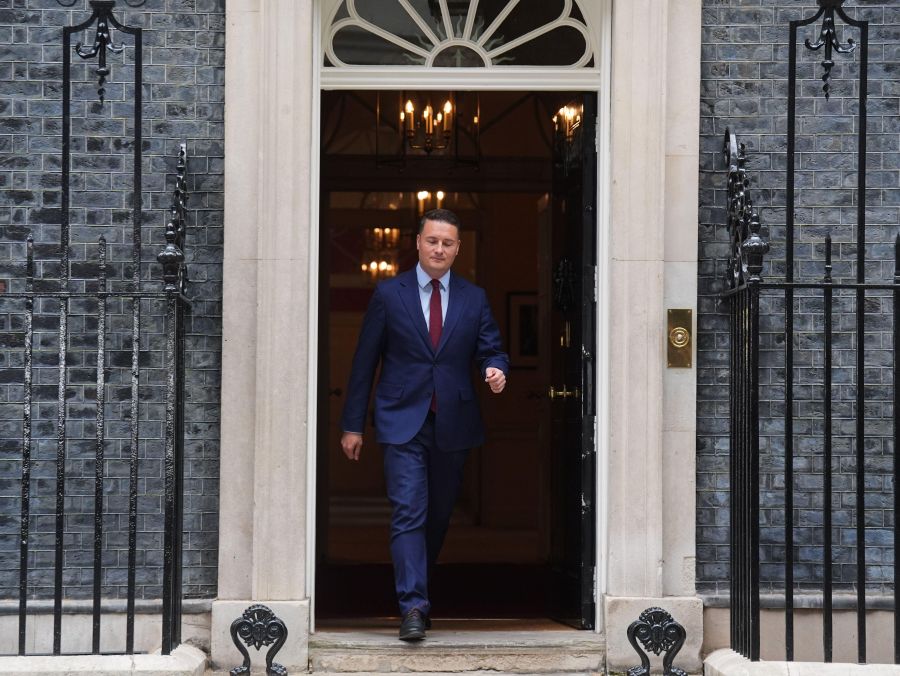
Wes Streeting leaves Downing Street after his last Cabinet meeting as Health Secretary on Tuesday morning © PA Images / Alamy Stock Photo
Should I stay or should I go now was the question on lots of ministers’ lips this week, as the Prime Minister’s premiership continues to hang in the balance. It’s certainly been a long week in Westminster….
Sunday saw a flurry of MPs publicly calling for the PM’s resignation after Labour lost almost 1,500 seats in the local elections. Catherine West spearheaded the group, threatening to trigger a leadership challenge, before…
Monday, when Starmer attempted to turn the tide with a “big reset” speech (we’ve heard that one before), stressing the need for bolder policy change, including on growth, defence and energy. Having failed to deliver the rallying cry he had hoped for, several more MPs, including a few PPSs, were calling for the PM to resign, and reports were flying round that top Cabinet Ministers Yvette Cooper and Shabana Mahmood were both recommending he set a timetable to go.
Tuesday morning saw scenes that would not be out of place in The Thick of It as the lobby crowded into Downing Street ahead of a tense Cabinet meeting. As the meeting ended, Starmer loyalists came out en masse to publicly support the PM, all the while the Government saw its first ministerial resignation, from Labour rising star, Devolution Minister and Peckham MP Miatta Fahnbulleh. Four Ministers in total resigned on Tuesday, all citing their dissatisfaction with the party’s leadership, most notably Safeguarding Minister Jess Phillips, whose resignation letter criticised the PM, stating: “the desire not to have an argument means we rarely make an argument”...
Wednesday saw a brief pause in the drama as King Charles entered Parliament for the State Opening (yes, that happened too this week – see below for more), but by the evening it became clear Wes Streeting was preparing to go, potentially with enough support from MPs for a leadership challenge. A staggering 11 Labour affiliated trade unions put out a statement arguing “it is clear” that the PM will not lead the Party to the next election.
Thursday morning saw ONS figures drop showing that the UK economy has grown by 0.6%, and stats showing NHS waiting lists were down… success stories that were overshadowed by headlines that former Deputy PM Angela Rayner had been cleared of deliberate wrongdoing by HMRC regarding tax paid on her home and that she had settled the tax bill. The question of when Wes will walk was answered at 1pm, when the Health Secretary announced his return to the backbenches. There was no sign of a leadership challenge though, and by…
Thursday afternoon, the PM looked to be on safer ground than he was at the start of the week. That is, of course, until former Digital ID Minister Josh Simons took to X to confirm that he was stepping down as MP for Makerfield, making it explicitly clear that he would like Mayor of Greater Manchester Andy Burnham to stand in the by-election in his place. Unsurprisingly, this was quickly confirmed by Burnham himself, who took to X to argue that “over the last decade” he has been “building a new and better way to do politics”, which he wishes to bring back to Westminster. Fast forward to…
Friday and the Labour Party ends the week with a new Health Secretary, several new ministers, a parliamentary by-election to contend with, a possible election for a new Mayor of Greater Manchester to campaign for, and – just about – the same Prime Minister.
Amid all the leadership drama, the King’s Speech on Wednesday saw the Government set out proposals for 37 Bills this parliamentary session. Some of the more important and interesting Bills include:
The Immigration and Asylum Bill will introduce a new asylum model based on contribution, integration and respect for UK laws, and create a single core protection model to replace the existing various forms of protection and reforming the modern slavery legislative framework to address potential misuse. Notably, it will also tighten the application of Article 8 of the ECHR to prevent exploitation of the system – perhaps in an effort to respond to commitments from the Conservatives and Reform UK that they would leave the ECHR if elected. In case you missed it (and you probably did!) the Conservatives published their alternative King’s Speech on Monday ahead of the King’s Speech (and all the other drama), in which they set out their intended Withdrawal of the ECHR and Constitution Restoration Bill – pledging to withdraw Britain from the European Convention on Human Rights and to repeal the Human Rights Act.
The Steel Industry (Nationalisation) Bill will grant the Government powers to nationalise steel companies such as British Steel, subject to a public interest being met. This comes in the context of the Government seizing control of British Steel’s Scunthorpe steelworks from its Chinese owners Jingye last year, in order to prevent the potential closure of its blast furnaces. But while the steelmaking industry has welcomed the proposed Bill, China isn’t quite so happy – with the Chinese Ministry of Commerce urging the UK Government to “respect the wishes of firms and market principles” and confirming they will “take strong measures to safeguard legitimate rights of Chinese companies.”
The Digital Access to Services Bill seeks to bring in the Government’s controversial Digital ID plans, establishing its legal framework, as well as setting out the information Digital ID credentials will contain. An audit function for Digital Right to Work checks will also be established.
The Small Business Protections (Late Payments) Bill will crackdown on late payments plaguing small businesses, which cost the UK economy £11bn annually and cause 38 businesses to close every day. Proposed measures will see maximum payment terms of 60 days imposed; and mandatory interest for late payments at 8% above the base rate; a time limit for raising invoice disputes. The Small Business Commissioner will also receive new powers to investigate businesses with poor payment performance and fine those who pay persistently late.
The Draft Ticket Tout Ban Bill will make it illegal to resell a ticket for a live event at more than its original cost and will cap the service fees charged by resale platforms, as has been called for by a number of artists, from Dua Lipa to Coldplay. However, the music industry has expressed disappointment at the Bill’s draft status, which deprioritises the legislation as it will be subject to consultation and pre-legislative scrutiny before it can be formally introduced to Parliament – meaning any visceral action could still be years away.
The Energy Independence Bill aims to cut energy bills facing households and businesses, with a focus on speeding up the delivery of renewables – as the Iran War drives home the importance of getting off the international fossil fuel rollercoaster. Measures include placing the Exchequer funding of 75% of the domestic costs of the Renewables Obligation scheme for three years on an enduring legal basis; establishing the Warm Homes Agency; reforming the regulatory framework to accelerate the deployment of clean power; speeding up the build-out of grid infrastructure; extending employment rights and protections for offshore workers in renewables; and delivering on commitments to ban fracking and to end new coal licenses.
The Clean Water Bill builds on legislation passed in the Government’s first parliamentary session to tackle sewage and crack down on polluting water companies. Following on from Jon Cunliffe’s review, this Bill will implement a number of his recommendations including creating a new Water Ombudsman and an independent, integrated water regulator. Additionally, the Bill will seek to modernise the economic regulation regime of the water sector and establish a Performance Improvement Regime; implement statutory resilience standards in the water system; give the new regulator stronger enforcement powers; and consolidate existing water industry planning into two core planning frameworks and explore establishing national water targets.
The Armed Forces Bill will ensure the UK continues to have a standing army; expand the pool of Reserves by changing the maximum length and age limit at which some personnel can be recalled; and establish the Defence Housing Service to provide military personnel with a decent home. Perhaps a little reminder that defence is still on the legislative agenda while everyone (and their mum) awaits the Defence Investment Plan.
The Social Housing Renewal Bill aims to protect existing social housing stock and incentivise the building of more social homes amid depleting supply. Measures include exempting newly built social housing from Right to Buy for 35 years and increasing the eligibility requirement for Right to Buy to 10 years.
The Education for All Bill seeks to take a first step at tackling the systemic and deeply-rooted crisis facing the SEND system. With the much-awaited Schools White Paper published earlier this year and the SEND consultation due to close imminently, this Bill includes proposals to require settings to produce an Individual Support Plan for every child with SEND; ensure staff in all educational institutions are trained on SEND and inclusion; require schools to pool a portion of their funding for SEND; and introduce a new EHCP template and amend the annual EHCP review system.
The European Partnership Bill aims to support closer cooperation and relations with the EU, providing powers to fulfil treaty obligations in agreements with the EU both now and in the future to enable domestic implementation of relevant commitments. Still no date in the diary though for this year’s UK-EU summit.
The Commonhold and Leasehold Reform Bill is set to create a new legal framework for commonhold and introduce a ban on the use of leasehold for new flats to ensure commonhold is the default tenure in future. Notably, it will also cap ground rents at £250 a year and abolish the leasehold enforcement regime of forfeiture. It comes as Labour seeks to deliver on its manifesto commitment to bring the “feudal” leasehold system to an end in this Parliament.
The Railways and Passenger Benefits Bill will establish Great British Railways to unite track and train under a single body, alongside the creation of a Passenger Watchdog and the consolidation of fares and tickets onto a single online platform.
The NHS Modernisation Bill aims to improve the health service’s efficiency, including by abolishing NHS England (and transferring its functions into DHSC); building a Single Patient Record to bring together patient health and social care records into one place; and developing a new Patient Experience Directorate in DHSC. As the seventh Health Secretary in as many years, good luck to newly appointed James Murray leading on this one.
Also proposed… the Competition Reform Bill, the Regulating for Growth Bill, the Enhancing Financial Services Bill, the Courts Modernisation Bill, the Police Reform Bill, the National Security Bill, the Tackling State Threats Bill, the Cyber Security and Resilience Bill, the Nuclear Regulation Bill, the Electricity Generator Levy Bill, the Public Office (Accountability) Bill, the Remediation Bill, the Civil Aviation Bill, the Highways (Financing) Bill, the Northern Powerhouse Rail Bill, the Draft Taxi and Private Hire Vehicle Bill, the Overnight Visitor Levy Bill, the Sporting Event Bill, the Northern Ireland Troubles Bill, the Representation of the People Bill, the Removal of Peerages Bill, the Sovereign Grant Bill and the Draft Conversion Practices Bill.
£1.42m – paid in cash by Nigel Farage to buy a house in 2024, shortly after receiving a controversial £5m donation
2 – number of times Mayor of Greater Manchester Andy Burnham has unsuccessfully run for the Labour leadership
5,399 – Labour majority in Makerfield in the 2024 general election.
0 – votes cast by Green Party leader Zack Polanksi at last week’s local elections
5.17% – 10-year bond yield reached today, the highest since 2008
2 – reasons why Keir Starmer is facing a “tough” time as Prime Minister, with energy and immigration responsible, according to US President Trump.
81 – number of Labour MPs who are backing Wes Streeting in a leadership contest… or are they?
The UK and other European countries have signed a ‘landmark declaration’ calling for courts to reassess how migration cases are interpreted, particularly in relation to deportations. Agreed at a summit in Moldova, the statement warns that European democratic systems risk being ‘undermined’ without stronger action on people smuggling and irregular migration. Backed by 46 Council of Europe member states, the declaration argues for clearer scope for national courts in such cases and states that the right to family life should not automatically prevent deportation. UK Foreign Secretary Yvette Cooper described the agreement as a “common sense approach” aimed at delivering a fairer and more effective immigration system.
The Prime Minister Keir Starmer has reportedly told Wales’s new First Minister Rhun ap Iorwerth that he is ‘open to a conversation’ about devolving further powers to the Senedd, according to the Welsh Government. This has come after Labour’s disastrous performance in the Welsh Parliament elections, with the Prime Minister said to be seeking a relationship with devolved governments based on shared interests. However, Plaid Cymru’s leader in the House of Commons Liz Saville Roberts posted on X that this ‘does not mean a referendum now’. In June, the Prime Minister will meet with the First Minister in person, alongside Scotland’s First Minister and Northern Ireland’s Deputy First Minister, where the issue could be discussed further.
The Government has launched a call for evidence to shape a new cross-government mental health strategy for England, aimed at shifting care from crisis intervention towards prevention and earlier support. Announced by the Department of Health and Social Care, the strategy will focus on improving access to support for children and adults, strengthening community-based services, and taking a broader approach across schools, workplaces and local government. Ministers have said the plan builds on record NHS mental health investment and workforce expansion, while mental health organisations have welcomed this announcement but also stressed that delivery, early intervention and joined-up support will be critical.
Former Deputy Prime Minister Angela Rayner has been cleared of ‘deliberate wrongdoing’ or carelessness by HMRC and has settled the unpaid £40,000 in stamp duty for her flat in Hove. She had paid the standard stamp duty, rather than the higher rate required should you be purchasing a second home; however Rayner assured she ‘set out to pay the correct amount of tax’ and was purely acting on the advice she received. The news dropped at 6am on Thursday, potentially paving the way for a leadership bid or a return to [insert Prime Minister’s name here] Cabinet.
The Conservatives launched an alternative King’s Speech setting out the Opposition plan to reverse Britain’s ‘drift into a slow decline.’ Notable policies include withdrawing from the European Convention on Human Rights; restarting drilling in the North Sea in the Get Britain Drilling Bill; introducing a 100% business rates relief for retail, hospitality and leisure businesses (capped at £110,000) in the Back Our High Streets Bill; restricting the eligibility for the Personal Independence Payment (PIP) for those with ‘lower mental health conditions’ in the Welfare Reform Bill; and expanding the use of stop and search as part of the Take Back Our Streets Bill.
Worcestershire Council formed a ‘Rainbow Coalition’ in order to remove Reform UK from power a year after they formed a minority administration. A council meeting on Thursday saw the Conservatives, Lib Dems, Greens and independents formed an alliance, with Green councillor Matt Jenkins made the new council leader. Former council leader Jo Monk was suspended from the party for ‘refusing to accept the democratic decision’ after the party chose to swap its leader. It’s fair to say that not everyone was happy with the coalition, with Kemi Badenoch suspending the Conservative group leader.
Nigel Farage was all smiles this time last week, but a new investigation from the Parliamentary ethics watchdog into a £5m donation from crypto billionaire Christopher Harborne threatens to cast a shadow over his party’s celebrations. The inquiry follows a tip-off from the Tories, who took the opportunity to report the donation to standards commissioner Daniel Greenberg in April. For those wondering what all the fuss is about, MPs are usually required to declare donations in a register of interests. Rivals have therefore accused Farage of breaking the rules, while he has contended that he was under “no obligation to declare something that is an unconditional, non-political, personal gift.”
There was no time for schadenfreude for Zack Polanski, though, as the media’s interest in probing the Green Party leader’s personal life and financial affairs continued this week. The latest reason for Polanski to come under fire? An accusation that he didn’t pay council tax on a houseboat in which he was living until recently. While in the process of moving, Polanski’s partner listed the houseboat as ‘our amazing home’, and the Green Party eventually admitted that its leader may owe thousands in outstanding bills, calling it an “unintentional mistake”. The controversy didn’t end here, though. The party also embarrassingly conceded that Polanski did not register to vote in the local elections due to the move, despite suggesting earlier that he had voted by post.
The SNP’s John Swinney faces cobbling together a governing coalition in Scotland, as his party retained the number one spot at Holyrood last week, but fell short of a majority. In a press conference at the weekend, Swinney confirmed that his door was open to every party represented in the Scottish Parliament, except for one: Malcolm Offord’s Reform UK. Speculation has arisen that the SNP could do a deal with the empowered Scottish Greens. The two parties have form, cooperating from 2021 under what became known as the ‘Bute House Agreement’ before the agreement broke down in 2023.
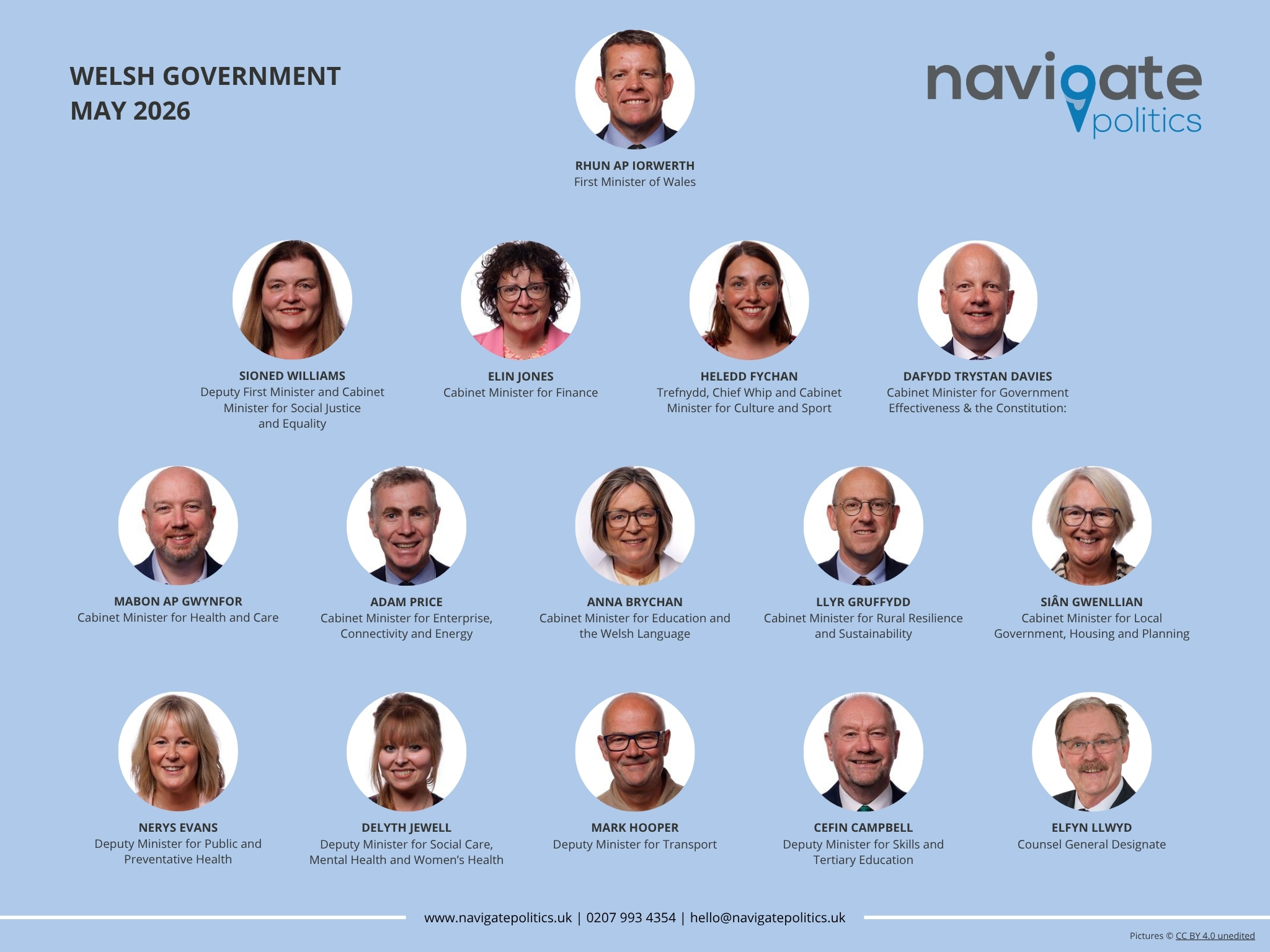
It’s all change in Wales, as newly elected First Minister Rhun ap Iowerth appointed his ministerial team of entirely Plaid Cymru members of the Senedd. Click here the to download our high-res organogram.
With Wes Streeting’s resignation on Thursday, James Murray was made Health and Social Care Secretary in his place. Lucy Rigby was appointed Murray’s replacement as Chief Secretary to the Treasury, and Rachel Blake was elevated from the backbenches to Economic Secretary to the Treasury in her place.
The resignations started as a trickle on Monday, with a a number of Parliamentary Private Secretaries standing down, including Sally Jameson (Home Office), Tom Rutland (Defra), Joe Morris (DHSC), Naushabah Khan (Cabinet Office), Gordon McKee (DWP) and Melanie Ward (MoJ). Miatta Fahnbulleh became the first minister to lose her Faith when she stood down as Devolution, Faith and Communities Minister on Tuesday. She was followed by Jess Phillips and Alex Davies-Jones, who shared the Tackling Violence Against Women and Girls across the Home Office and Ministry of Justice respectively (decisions which may have been linked to the perceived overreach of the Prime Minister’s appointment of Harriet Harman as his Adviser on Women and Girls last week). Zubir Ahmed rounded off Tuesday’s resignation when he stepped down as Health Innovation and Safety Minister.
Downing Street moved quickly to replace them, with Nesil Caliskan, Natalie Fleet, Catherine Atkinson and Preet Kaur Gill replacing Fahnbulleh, Phillips, Davies-Jones and Ahmed respectively. Alongside this, Gen Kitchen, Deirdre Costigan and Shaun Davies were appointed Whips, while Michael Payne (Home Office), Jayne Kirkham (Defra), David Burton-Sampson (DHSC), Sean Woodcock (Cabinet Office), Tim Roca (DWP) and Linsey Farnworth (MoJ) were shuffled onto the PPS conveyor belt.
Alongside Harman’s appointment as his Adviser on Women and Girls, the Prime Minister also made Gordon Brown his Special Reviewer on Global Finance and Cooperation, which will see him focus on raising defence-related capital.
Stephen Flynn and Stephen Gethins stood down as MPs, having won election to Holyrood last week. Dave Doogan has become the SNP Westminster leader in Flynn’s place.
Louise de Sousa has been made ambassador to Colombia, while Maya Sivagnanam was named the new ambassador to North Macedonia and Tammy Sandhu is the new ambassador to the Vatican.
Kate Gibson has been made Deputy Chair of Natural England.
Simon Fabri was appointed Chief Executive of HM Government Communications Centre (HMGCC), the Government’s centre for national security engineering.
Joanne Segars was appointed Chair of the Pension Protection Fund (PPF), which protects members of defined benefit pension schemes should their employer face insolvency
Donna Ockenden has been appointed to lead an independent review into maternity and neonatal services at University Hospitals Sussex NHS Foundation Trust, following a string of failures.
See it. Say it. And Sort out Britain’s economic policy, the Resolution Foundation has argued, which, in a new report, diagnosed last week’s bruising election results as a symptom of the UK’s weak economic performance and, for working families at least, stagnant living standards. With the economy continuing to lag behind players such as the US, and with increased uncertainty due to conflict in the Middle East, the think tank has urged the Government to focus squarely on growth and avoid other distractions (ha). Its recommendations include: pursuing closer economic integration with the EU, reforms to property and capital gains taxes, boosting housing supply, the eventual end of the pensions Triple Lock as well as increased support for young people through expanded mental health provision, apprenticeship reforms and help for first-time buyers.
On the same post-election note, the newly rebranded/formed think tank ThinkLabour (formerly Labour Together) has pushed back against claims that Labour’s electoral coalition is now too fragmented to hold. In a new report, it rejects the idea that the party’s support base has become irreparably divided, arguing instead that Labour can still command broad support if it remains ‘proud of its core values’ while appealing across different voter groups. In its analysis, this means simultaneously engaging left-liberal voters aligned with its values, economically insecure voters seeking tangible improvements in living standards, and more transactional voters focused on competence on issues such as the economy, the NHS and immigration, with its recommendations including a more honest acknowledgement of the trade-offs involved in policymaking.
Two in three Britons believe that Starmer should not lead Labour into the next General Election, including 59% of those who voted Labour in 2024 according to the latest Ipsos polling. It has found, however, that the public are more split on precisely when he should go: 35% say immediately, while another 31% just want him to step down at some point before the next election. Despite this, Labour still maintains an advantage over Reform UK in hypothetical head-to-heads under a range of potential leaders, including Andy Burnham who leads on 16 points, Starmer on 11 and Wes Streeting on 7.
In more good news for Andy Burnham, YouGov polling has found that he remains the most popular Labour figure among the general public while also claiming the coveted title of the only figure the majority of 2024 Labour voters see positively. Streeting’s favorability on the other hand has fallen eight points, with 16% of the public holding a positive opinion of him and 44% seeing him in a negative light.
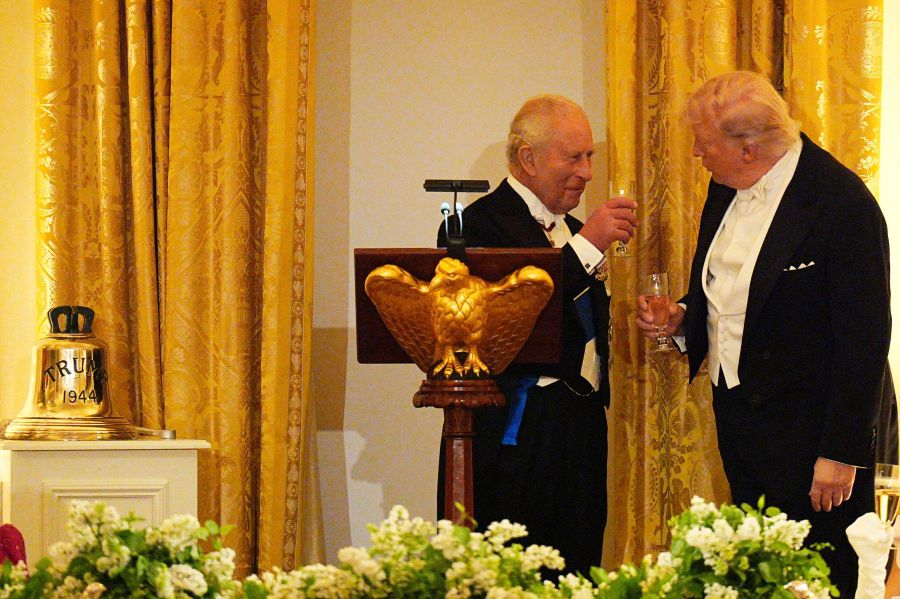
While King Charles was perhaps wondering whether his appearance in Parliament would be going ahead, he was commended by none other than Rod the Mod – Rod Stewart – who praised the King for his recent appearance in the USA and for, to quote directly, putting the “little ratbag” in his place. Before the King delivered his speech on Wednesday, while the other Rod – the Black Rod – ceremonially banged on the Commons door, Scottish Labour MP Torcuil Crichton heckled: “Not now, Andy!” Just as we know who the ratbag is, I’m sure we can all deduce what that was about…
Speaking of the King of the North, while most of Westminster was wondering who would give up their seat for Andy Burnham, Liverpool MP Paula Barker was quick to state that, while she would be delighted if a seat were found for him, she would not be the one to do it.
Unsurprisingly, Kemi Badenoch was easily able to find material for her stand up special – her response to the King’s Speech – and that response appeared to win her an unlikely new fan, with rapper Nicki Minaj declaring that “the UK is truly one of a kind” and predicting that Badenoch would one day be portrayed in film and television “just like Margaret Thatcher” (hopefully, Badenoch is a one of the Barbz) Unfortunately for Lib Dem leader Ed Davey, his follow-up to the King’s Speech was not met with the same enthusiasm, as a sizeable chunk of the Commons appeared to take it as their cue to leave the chamber altogether.