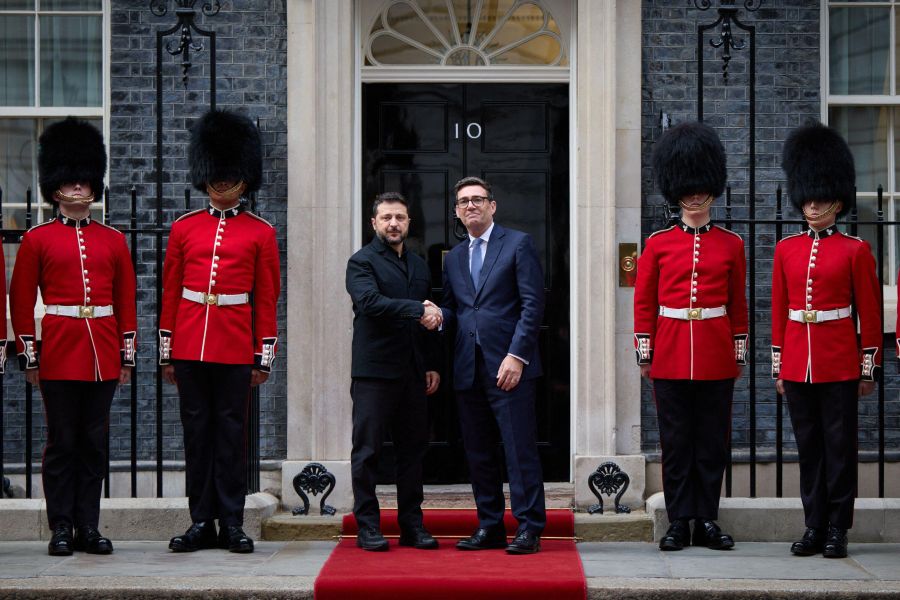
The Prime Minister and soldiers from the Irish Guards greet President Zelenskyy outside No.10 on Wednesday © dpa picture alliance / Alamy Stock Photo
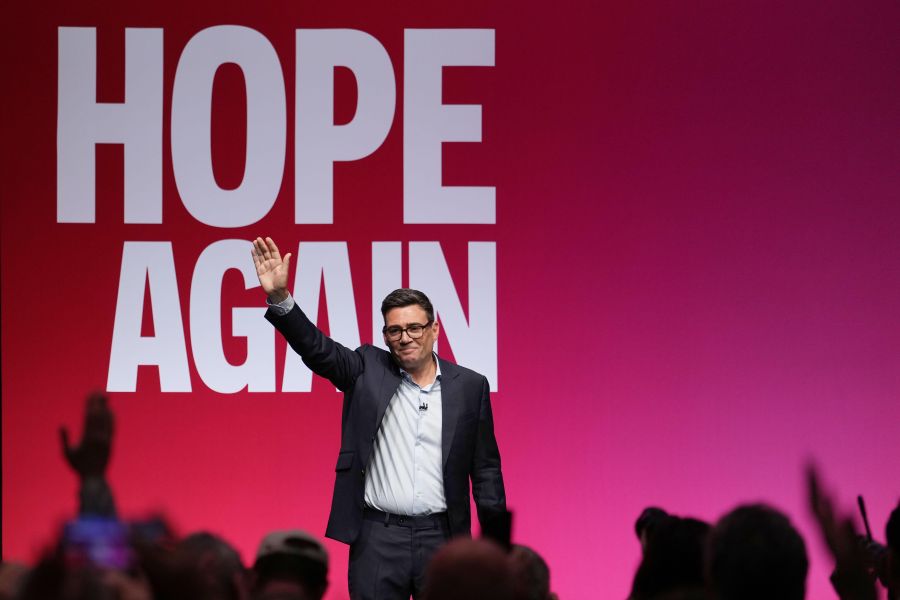
Conference recess is over, and so apparently is the ceasefire in the Brexit wars. Andy Burnham returned to the Commons on Monday with a statement on international events, but it was a rather loose answer to a question on The Rest is Politics podcast that ensured 2016 was back at the forefront of everyone’s minds. Asked whether there had been Russian interference in the referendum, the PM said he had sought advice on entering Downing Street and received a “clear answer that, yes, there was”. Cue accusations that he was questioning the legitimacy of the result, with Europe Minister Stephen Doughty dispatched to the news studios for a Monday morning grilling in an attempt to quell the story/find a version that was as close to the truth as possible [delete as appropriate]. Despite a noble attempt to quash an unnecessary argument restarted by an unguarded PM, the week’s agenda had been unintentionally set…
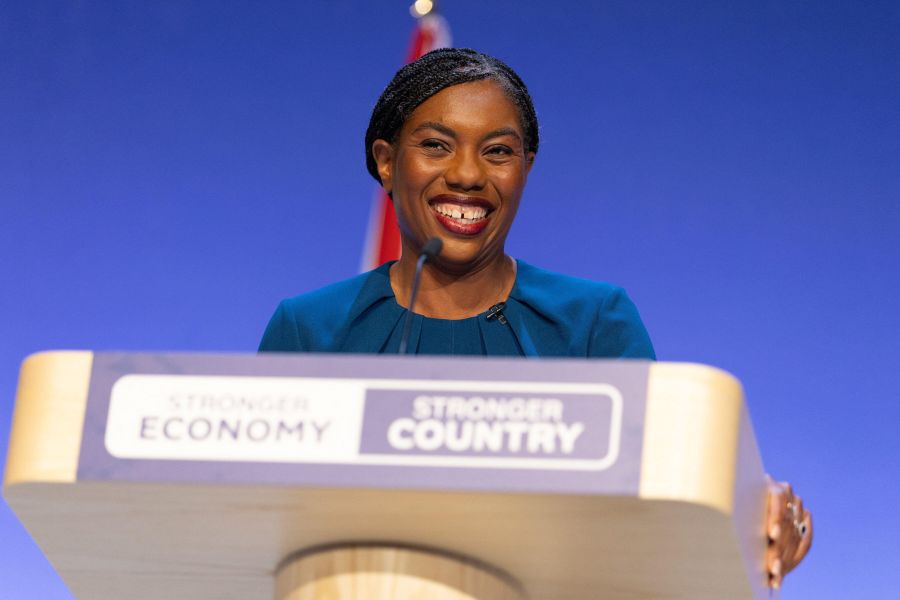
Kemi Badenoch wasted little time picking up the argument, demanding that Burnham confirm whether he considered the referendum legitimate and publish evidence if he believed Moscow had swung the result. The PM’s Commons response was rather more circumspect than his podcast appearance, noting that Russian attempts to interfere in the 2019 election were established, but he denied claiming Russia had changed the outcome and explicitly affirmed the referendum’s legitimacy. Coming off the back of a successful conference and the first poll to put the Tories ahead of Reform since 2024, Badenoch accused him of resurrecting Brexit to distract from the Government’s immediate challenges, including the public finances ahead of the looming Budget. With arguments about foreign interference, respecting the result and Britain’s European future all back on the parliamentary menu, anyone hoping those debates had been settled was in for a familiar afternoon.
There is, meanwhile, an actual summit to prepare for. Burnham confirmed that UK-EU talks will take place on 20 November, with food and drink trade, emissions trading, energy links, youth experience schemes and cooperation on immigration all on the table. He argued closer ties could cut bureaucracy for farmers and exporters, ease household costs and support growth, before calling for a serious discussion about the UK’s longer-term relationship (grab the popcorn for that one folks). So, a summit intended to improve relations with Brussels arrives with Westminster once again debating the referendum, Russian interference and what respecting the result actually means. Ten years on, the cast has changed, but everyone still seems to remember their lines. This one will run and run…
3,034 – people arrested for terrorism-related activity in Britain in 2025, a 1,114% increase from 250 in 2024 (2,779 of which were linked to support for Palestine Action)
6 – areas in which a severe drought has now been declared in England
100,000 – hospitality sector jobs the Government want created for young people aged 18-24
0.1% – GDP growth in August
£2,900 – the amount the average family is worse off than if the economy had continued on its pre-pandemic trajectory according to a Resolution Foundation report this week
6,277 – modern slavery cases awaiting a conclusive decision
15 – years former DUP leader Jeffrey Donaldson was jailed for, for child sex abuse
50 degrees – the temperature of some fridges in French supermarkets following a cyberattack

No prizes for guessing what these famous politicians have in common: Cameron, Lloyd George, Miliband, Blunkett, Owen, Lammy, Gauke, Davis…
British politics is seemingly wall to wall Davids. Indeed, there are 12 Davids in the House of Commons, and a further 37 in the Lords. But these are small samples – so I decided to investigate whether Davids were equally prolific in local government. It came as little surprise that of the 19,237 councillors across the UK, 459 are Davids, beating John (402) and Paul (392).
Astonishingly, the most common woman's name, Sarah, does not appear until 19th place, with 137 councillors. That’s more than three Davids for every Sarah. Helen, Sue and Julie follow, each with around 90.
Each party has its own cast of characters. Reform's council benches are laden with Karls, Russells, Darrens and Waynes - all around three times more common than amongst all councillors. The Conservatives have more than their share of Rogers, Phils and Rays. Labour stands out for Lynns, Sharons and Mohammeds, the Lib Dems for Julians, Sandras and Ruths. The Greens are the only party whose signature names are mostly women's: Natalie is more than five times as common among Green councillors, followed by Rachel, Jo and Laura.
Surnames are pretty much as expected. Smith tops the table with 186 councillors, followed by Jones (161), Williams (150), Davies (118) and Taylor (107).
Geography plays a part too. David is the most common first name in much of the UK, but John edges it in the North West, the South West and Scotland, and Paul does so in the West Midlands and Northern Ireland.
You’ll be shocked to discover that a Welsh councillor is around 15 times more likely than average to be called Geraint or Huw, and a Scottish one ten times more likely to be a Willie or a Donald. The North East has an unusual concentration of Stevens and Scotts, whilst the East Midlands has clearly been inspired by Pam’s campaign against the erection of a phone mast in Gavin and Stacey, as it contains a disproportionate number of both Micks and Pams.
And the most common full names? You might assume David Smith, but there are only three of those. That title goes Mark Smith, Gareth Jones and David Williams, with seven councillors apiece.
Prime Minister Andy Burnham welcomed President Zelenskyy back to No. 10 for his second visit to the UK since Burnham entered office. Military support for Ukraine ahead of what is expected to be a difficult winter was top of the agenda, and they no doubt also discussed President Trump’s latest spat with Zelenskyy, which has culminated in the Trump administration (allegedly) cutting some Ukrainian access to Starlink, which is integral to its drone operations.
Chancellor John Healey spoke with Chinese Vice Premier He Lifeng about ‘the importance of the UK-China relationship across trade, investment and financial services’, before he and Foreign Secretary Ed Miliband flew to Bangkok for the IMF Annual Meetings. Healey used it to emphasise the importance of driving economic growth and building resilience to crises and shocks, while Miliband spoke about how the current global financial system is ‘failing developing economies and holding back shared global prosperity.’ Ever keen to keep the optics on brand, they even took a journey in a tuktuk while trying Thai snacks – one wonders the persuasion it took to get Miliband to consent to eating on camera…
On his way to Bangkok, Miliband stopped off at the Warsaw Security Forum, where he spoke alongside the Foreign Ministers of Poland, Germany and Norway at a panel event on the threat of Russian hybrid attacks. Separately, he spoke with his American counterpart Marco Rubio about Houthi attacks against Saudi Arabia, the war with Iran and the conflict in Ukraine. In other defence developments, Defence Secretary Wes Streeting was in America for his first meeting with Secretary of War Pete Hegseth at the Pentagon, and Defence Procurement Minister Luke Pollard welcomed his German counterpart to London for talks on deepening defence-industrial cooperation.
Business Secretary Jonathan Reynolds, Environment Secretary Angela Eagle and Scotland Secretary Douglas Alexander attended a trade mission to Delhi and Mumbai, during which Reynolds met with his Indian counterpart. They were also joined by northern mayors and devolved leaders looking to promote northern businesses.
AI Minister Kanishka Narayan hosted his Canadian counterpart in London, where they renewed the 2024 UK-Canada Science of AI Safety Partnership with a ‘strengthened focus on sharing of information on frontier AI risks and capabilities.’
Foreign Minister Uma Kumaran attended the 2026 Arctic Circle Assembly in Iceland, where she unveiled the UK’s new Arctic Policy Framework and met with representatives from Norway, Greenland, Italy and, for some reason, Singapore.
Energy Minister Michael Shanks met with EU Ambassador to the UK Jukka Salovaara to discuss shared energy security and industrialisation challenges.
The Government confirmed the appointment of Sir John Kingman as the first Chair of Great British Railways (GBR), marking another step towards bringing the railways back under public control. He currently chairs Barclays Bank UK and has previously held the same role at Legal & General Group and Tesco Personal Finance.
Meanwhile, the Ministry of Defence appointed Andy Lord as Interim Chair of the National Armaments Director (NAD) Group Advisory Board. Lord is currently Commissioner of Transport for London, overseeing the delivery of safe and reliable transport services across the capital.
Fraser Hardie was appointed a Board Member of The National Lottery Community Fund for a four-year term beginning in January 2027. Hardie is a Senior Adviser at Teneo and has held senior leadership roles at the consultancy, alongside positions at Rio Tinto and Powergen.
The Lord Chancellor approved the appointment of Tim De Meyer as the Sentencing Council’s Policing Member for three years from 1 October.
Professor Jason Leitch, Scotland’s former National Clinical Director, has been appointed Chief of Defence Medical, where he will lead the transformation of military healthcare. Leitch will take up the role on 2 November.
Dr Jessica Harrison-Hall was appointed to the Reviewing Committee on the Export of Works of Art and Objects of Cultural Interest. She is currently Keeper of Asia and Curator of the Sir Percival David Collection at the British Museum, and will begin a four-year term on 4 November.
10 Downing Street also confirmed that the King has appointed William James Baxter as His Majesty’s Lord-Lieutenant of County Tyrone, to succeed Sir Robert William Lowry Scott following his retirement on 17th June 2026.
President Zelenskyy was greeted by a military honour guard in Downing Street this week, as the UK has pledged to go ‘further and faster’ in supporting Ukraine. The Government announced £45m of air defence missiles, with £10m of deliveries accelerated to meet urgent winter needs, while the Prime Minister tasked ministers with drawing up further sanctions, military aid and financial support. The UK has also reaffirmed plans to ban maritime services for Russian LNG exports, urging international partners to follow suit and increase pressure on Putin to agree an energy ceasefire.
Reform UK pledged to suspend the UK’s asylum system for a full parliamentary term if elected, by rejecting new claims, voiding existing applications and ending legal refugee routes and resettlement schemes. The party would also scrap asylum tribunals and deport 90,000 people with outstanding appeals. To do so, and to prevent legal challenges, Reform would leave the ECHR, repeal the Human Rights Act and disapply the 1951 Refugee Convention.
The SNP Conference got underway to close out conference season, with Economy Minister Stephen Flynn delivering the first speech yesterday in which he called on the Prime Minister to “bring it on” and let the Scottish people vote in an independence referendum – as he told delegates “we are winning the argument”. Party Leader and First Minister of Scotland John Swinney will deliver his address on Saturday.
The Government launched a ‘root-and-branch’ review of security for those in public life, following the murder of Ann Widdecombe and rising threats against political figures. Led by former National Security Adviser Sir Stephen Lovegrove, the review will examine whether protection is adequate and funding is used effectively. Dedicated police support is also set to be extended to groups including party leaders who are not MPs, peers and former elected representatives.
Flood Action Week somewhat ironically saw the declaration of ‘severe drought’ across six parts of southern England, following months of low rainfall. The change in status comes in response to specific concerns for two major reservoirs, with Wimbleball Reservoir at just 14.9% capacity while Ardingly is at 19.4%. It also comes following the launch of the new Flood and Drought Resilience Taskforce this week, which met for the first time on Wednesday.
Russia remains “aggressor number one”, MI5’s Director General has warned in his annual threat update, while describing Iran as the “other state keen on subcontracting its UK violence” and highlighting Chinese espionage and interference. In his speech, Ken McCallum said arson, sabotage and cyber threats were targeting “the cohesion of our society”, prompting MI5 to build a third core mission, “Protect”, focused on national resilience. He also confirmed the launch of an AI Threat Assessment Centre, warning that “just as the benefits of AI are real, so are the national security risks”.
The DWP has partnered up with UKHospitality to deliver 100,000 jobs for young NEETs, with major employers including McDonald’s, Nando’s and Burger King committing to provide paid employment as well as work experience and training opportunities for 18-to-24-year-olds who are not in education, work or training.
Great British Railways has found its future home, with the Government confirming its headquarters at Derby’s Becketwell site. Due for completion in spring 2029, it will accommodate up to 450 staff and is expected to boost the regional economy by £151m.
Much to the delight (we think) of politicos across the UK, Parliament returned this week after a month’s break for conference season. Fresh from widely praised conference speeches, Andy Burnham and Kemi Badenoch picked up where they left off at their first PMQs since early September, clashing over welfare, defence spending and energy policy. There was plenty to catch up on, with Burnham briefing MPs on international events, including the UN General Assembly, Russia, and his meeting with President Trump. Closer to home, ministers faced questions on the Sustainable Farming Incentive, the early release scheme for prisoners and the proposed National Care Service.
A shared priority of Keir Starmer and Andy Burnham’s took a step forward this week, as the Public Office (Accountability) Bill returned for committee stage and peers began debating more than 150 amendments, including in relation to higher education, whistleblowers, and NHS foundation trusts. Peers also debated food security, with many warning of risks posed by AI and cyber-attacks, after French supermarkets saw millions of euros’ worth of food destroyed when fridges were warmed to 50C overnight.
Parliament’s return also brought the usual flurry of reports scrutinising Government policy, with the Lords Built Environment Committee setting out five barriers the Government needs to overcome to achieve its aim of creating a ‘new generation of new towns’. In more positive news, the Scottish Affairs Committee found bridges and tunnels could have ‘transformative benefits’ for island communities, while the Public Accounts Committee used its annual report to call for the Government to be better prepared to take advantage of new technologies such as AI.
While welcoming German legislators to Parliament Emily Thornberry didn’t mention the war, but didn’t get away with it, as social media raised an eyebrow at her assertion that “Germany is, and always has been, a key ally”. Of course, she might protest that her statement was pretty much there, albeit with one or two exceptions…
Responding to an ITV investigation which showed Reform UK councillors and candidates “expressing racist views and using offensive language”, Nigel Farage responded that the remarks could be put down to the fact that “not everyone” had been to the University of Oxford or Eton, and therefore didn’t always “[express] themselves in very carefully formulated language”. Observers were quick to point out that while hitting out at privately-educated condescension, Farage himself had attended the private Dulwich College.
London Mayor Sadiq Khan’s succinct new bio on X also drew some attention, stating simply: ‘Londonmaxxing since 2016’. While it may be understandable for the Mayor to wish to seize upon a positive (for once) social media trend about London, his adoption of the slogan is arguably a little late, with more-online readers perhaps able to recall that its popularity peaked a bit earlier in the year.