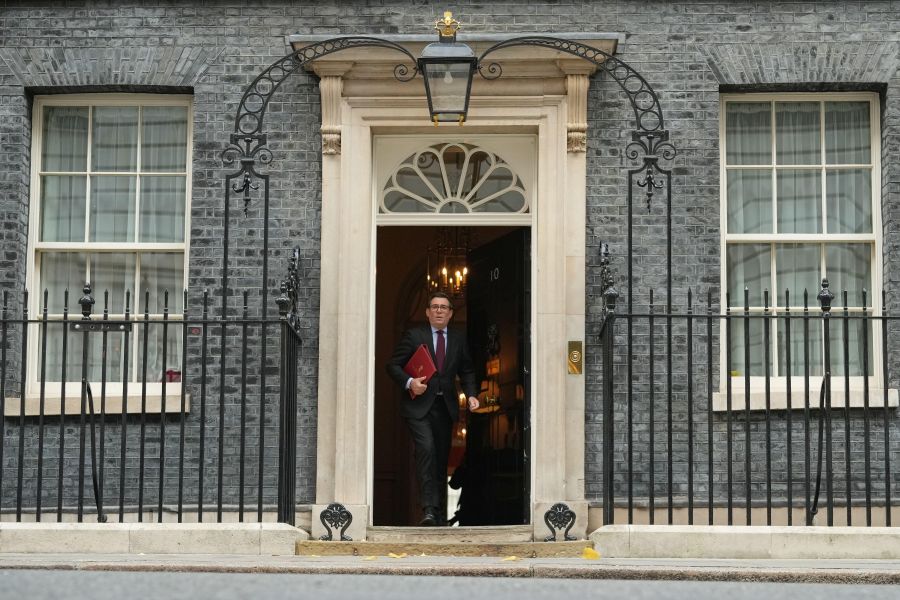
Burnham leaving Downing Street, following accusations that he “degraded” the building after letting a TikToker film at the iconic location. © Associated Press / Alamy Stock Photo
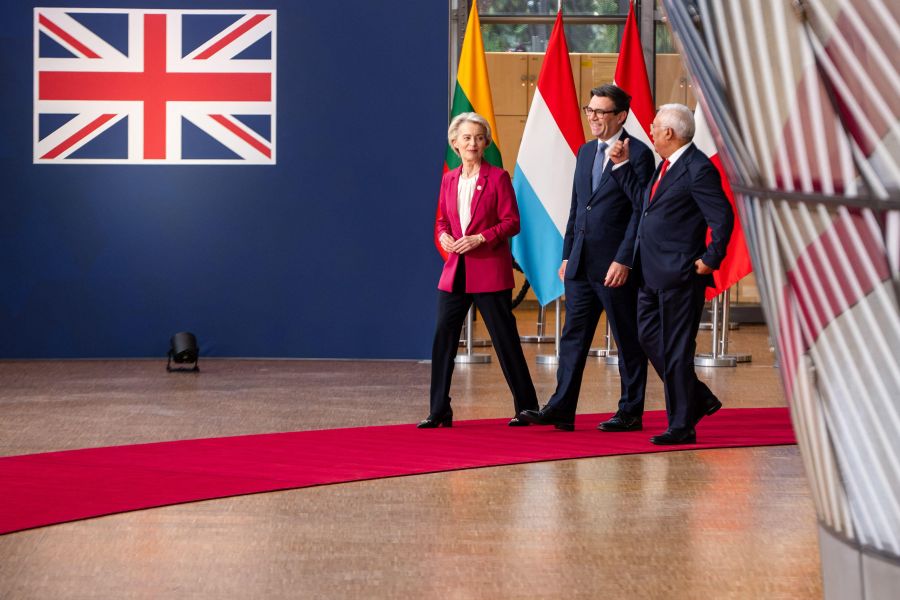
Andy Burnham may have returned from Brussels with a deal, but Westminster has spent another week arguing over whether it is quite as done as advertised. EU demands on student fees have left London and Brussels at odds over whether the wider package can proceed without a settlement. Kemi Badenoch pressed the point at PMQs on Wednesday, alongside the row over influencers invited to Downing Street (see below for more on that one). With two rival ‘stay out’ campaigns having now been launched, there is an increasingly familiar feel to proceedings… Beyond the negotiating table, there is the small matter of whether reopening the Brexit debate is electorally wise. Burnham’s bet is that closer ties will deliver economic gains and win back voters tempted by the Lib Dems and Greens; the risk is that he also gives Nigel Farage a familiar cause to rally around. For a Prime Minister who wants policy judged against his ‘Makerfield test’, the challenge is clear: can he convince voters that the reset will improve their living standards, while explaining why university fees for EU students have become part of the bargain? Brussels may be one hurdle; the doorstep is another.
Meanwhile, the publication of the Timms review on Tuesday ensured welfare reform remained firmly on the political agenda, with proposals to overhaul PIP assessments and make the application process easier. Coming hot on the heels of Milburn’s review into young people and work, it has also left ministers facing an awkward question: will their efforts to reform welfare actually cost more? The IFS warns that Timms’ proposed changes would probably increase claims and benefits spending, unless eligibility or award levels are tightened elsewhere. Milburn’s package would require more spending on services upfront, with longer-term savings dependent on getting more young people into work. For a Government promising to bring the welfare bill down, the prospect of spending more now in pursuit of uncertain savings later makes for an awkward political sell. With the difficult decisions on entitlement still to come in next year’s White Paper, ministers have two reviews in hand and plenty of arguments still ahead…
77,000 – UK net migration in the year to June 2026, the lowest since 1997 if you leave out pandemic years.
Nearly 100 – Labour MPs who have signed a letter urging the Prime Minister not to approve Rosebank oil field. Drill, baby, don’t?
£27m – UK funding for Thrive, a new programme to tackle online abuse of women and girls.
22% - the vote shares for both Conservatives and Reform UK in YouGov’s latest voting intention poll. Somewhere, a defecting MP is still working out which side to stand on!
40,000 – number of people and organisations whose views fed into the Timms Review, the first full review of PIP in its 13 years, which recommended replacing PIP with a reformed benefit.
26% - the rise in Ofgem’s energy price cap, which goes up to £2,166 a year for a typical dual fuel household, £443 more than it is currently.
£85m – the fines the CMA handed to three fragrance suppliers for colluding. I guess something smelled off!
£11.2m – new funding for coastal erosion that was announced, shared across 12 council-led projects.
58% - the share of UK food and drink exports bought by Europe.
2027 – when new limits on NDAs take effect, allowing victims of crime to speak to anyone they choose about their abuse, even if they have signed an NDA.
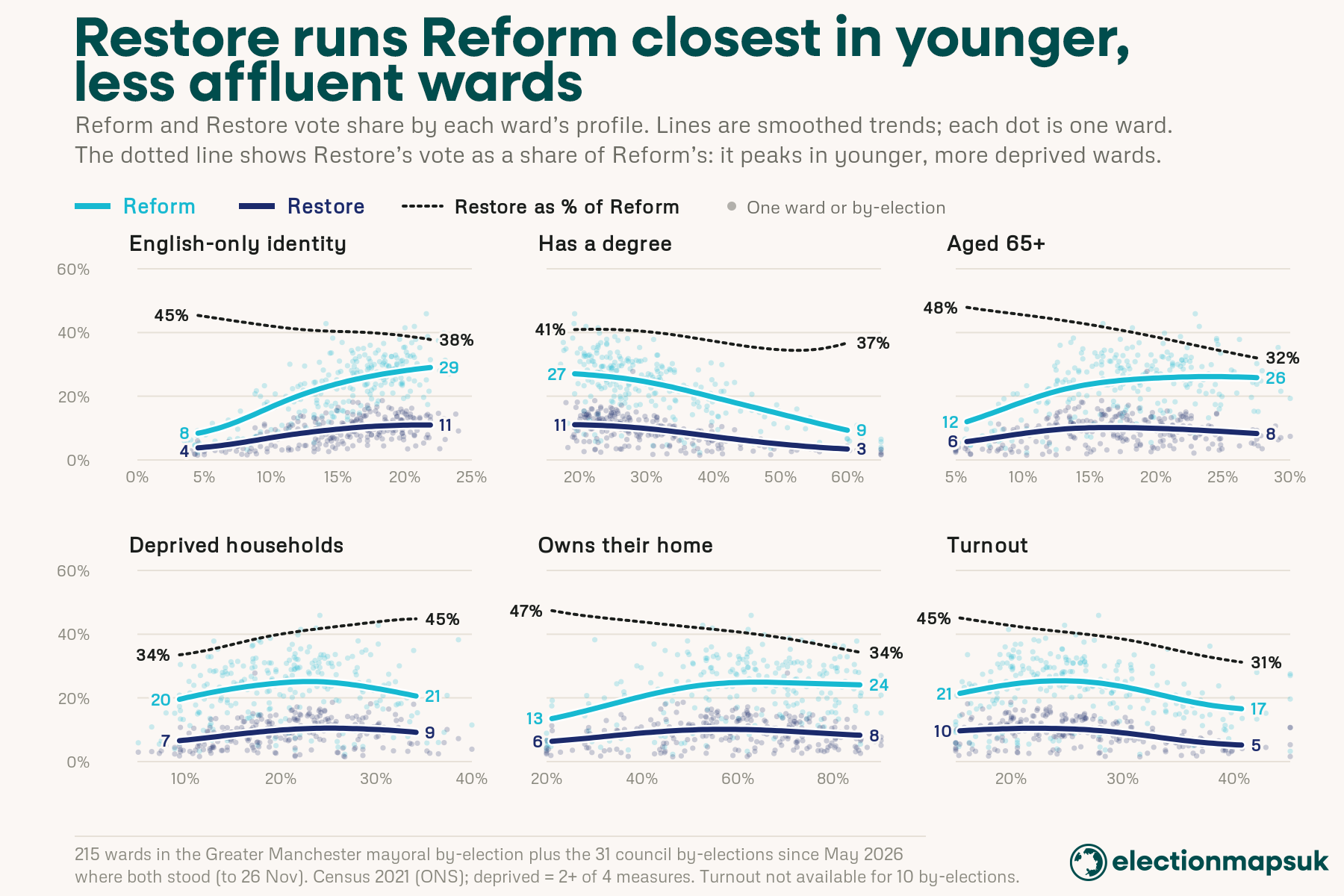
Restore Britain is now a regular contender in council by-elections, standing in 29 of the 48 contests since October, and averaging 7% of the vote within those 29 wards. It is easy to assume that their vote follows that of Reform UK - albeit at a lesser magnitude. They are close similarities (r = 0.71) but the data suggests there are also real differences in the parties’ voter bases.
I analysed results from the 215 wards in the Greater Manchester Mayoral By-Election, in addition to the 31 council by-elections since May where both Reform and Restore were on the ballot.
For Reform, the strongest link by some distance is English-only national identity (+0.77). For Restore, it is the share of graduates (-0.61), almost exactly matched by Reform (-0.62). Both do well where people identify as English and badly where more people are graduates.
The differences emerge on age, deprivation and turnout. Reform's vote is strongly tied to older wards (+0.50); Restore's barely is (+0.18). Home ownership helps Reform (+0.33) but makes almost no difference to Restore (+0.07).
The chart's dotted line, Restore's vote as a proportion of Reform's, makes this clearer. In the youngest wards, Restore receives almost half as many votes as Reform (48%); in the oldest, about a third (32%). Reform's vote more than doubles as wards get older, from 12% to 26%, while Restore's barely shifts.
Deprivation, measured by the census as households falling short on at least two of employment, education, health and housing, pulls the other way. Reform's vote is flat at around 20% whether deprivation is low or high. Restore's rises, taking it from about a third of Reform's level (34%) in the least deprived wards to nearly half (45%) in the most.
Turnout tells a similar story. Both parties do worse where more people vote, but Restore falls further: from 10% to 5% across the range, while Reform drops from 21% to 17%. In the lowest-turnout wards Restore won 45% as many votes as Reform, against 31% in the highest. That largely reflects deprivation, since turnout is lowest in poorer areas.
The council by-elections are noisier, as local candidates matter more. Last night’s result in Shard End, Birmingham, one of the most deprived wards in our sample, fits: Restore took 18%, more than half Reform's 35%.However, its best result since May, 28% in Huncoat (Hyndburn), came in a less deprived ward.
Restore is less a carbon copy of Reform than a younger, more disillusioned, and less affluent cousin. If it keeps growing, it is likely to bite hardest not in Reform's older, comfortable heartlands, but in younger and more deprived areas.
The Prime Minister swung by Amsterdam on his way back from last week’s UK-EU summit, where he and his (Dutch) wife were taken out for dinner at the national museum of the Netherlands by Dutch PM Rob Jetten and his husband. This week he hosted King Abdullah of Jordan for talks on defence ties and instability in the Middle East.
Further north was Chancellor John Healey, who held talks with the Danish Prime Minister Mette Frederisken and Taxation Minister Jakob Engel-Schmidt. The talks focused on trade, the industries of the future, and Healey’s old portfolio of defence.
Defence Secretary Wes Streeting travelled on from Poland (after Russian drones entered its airspace last week) into Ukraine for his second visit in the role, meeting with President Zelenskyy and Defence Minister Yevhenii Khmara. While there, he became the first UK Defence Secretary to visit Kharkiv, which is just 20km from the frontline.
Transport Secretary Heidi Alexander met with US Transportation Secretary Sean P. Duffy in Washington DC for talks which focused on US-UK aviation links. She also met with Waymo as it rolls out its self-driving vehicle tests in London and visited a refurbished Union Station in the capital.
Foreign Secretary Ed Miliband and Overseas Territories Minister Uma Kumaran hosted leaders and representatives at the Overseas Territories Joint Ministerial Council in London, where they announced £18m in new funding to tackle organised crime, violence and emerging security threats. Miliband also had a meeting with Jordanian Deputy Prime Minister and Foreign Affairs Minister Ayman Safadi, focusing on Gaza and the West Bank.
Defence Readiness and Industry Minister Luke Pollard hosted his Saudi counterpart, Bandar Al-Khorayef, at Lancaster House for the bi-annual Industrial Co-operation Committee, to review work on defence-industrial co-operation and agree practical priorities.
Development Minister Kirsty McNeill attended the UK-Ghana Security Dialogue in London, where she signed new agreements on cyber and fraud. Meanwhile, Americas Minister Chris Elmore hosted the third UK-Mexico Multilateral and Human Rights Dialogue in London with his Mexican counterpart.
A couple of changes to House of Commons Select Committee memberships were approved this week, as Alison Bennett MP has replaced Cameron Thomas on the Digital, Culture, Media and Sport Committee; and Alex Barros-Curtis MP has replaced Matt Bishop MP on the Justice Committee.
A leadership change has been announced at the Adult Social Care Negotiating Body ahead of negotiations on England’s first fair pay agreement for care workers, with Baroness Christina McAnea appointed as Chair for a three-year term. She will lead discussions between employers and trade unions on pay, terms and conditions, with the agreement backed by £500 million and aimed at improving recruitment and retention across the sector.
Turning to Number 10 North, and Chairman of Great British Energy and former Siemens UK Chief Executive Jürgen Maier has been appointed the Government’s Northern Growth and Reindustrialisation Commissioner, as announced by First Secretary Louise Haigh MP during her speech at the CBI Annual Conference.
Richard Las CBE has been appointed as the inaugural Independent Reviewer of the Public Sector Fraud Authority’s enforcement, investigation and recovery functions. The new ministerial role will oversee the use of powers to investigate fraud, impose penalties and recover public money.
Both Harriet Rees and Dr Rohit Dhawan, the Government’s Financial Services AI Champions, have had their appointments extended until July 2027. Appointed in January, they have worked with industry, regulators and other stakeholders to identify barriers to AI adoption and recommend ways to support its responsible use across financial services.
Also in the financial services sector, Daniel E. Pinto has been appointed as an external member of the Bank of England’s Financial Policy Committee for a three-year term, beginning on 4 January.
Kate Tandy has been appointed General Counsel at the Office for Environmental Protection on a permanent basis following an open competitive process, having served as Acting General Counsel since February 2026.
Julian Blazeby has been appointed Chairman of the Disclosure and Barring Service (DBS), succeeding Dr Gillian Fairfield, whose eight-year tenure ends on Monday.
William Sargent has been appointed Chair of the Better Regulation Executive, which was restored by the Chancellor at the Budget to improve the UK’s regulatory system and make it more proportionate and predictable.
The Government confirmed that the DVLA will have a new Chair from 1 December, with Tracy Westall OBE appointed to the position for a three-year term.
Influencer-gate reached Parliament as Kemi Badenoch pressed the Prime Minister for an apology over one particular video filmed on the steps of Number 10. Badenoch described the words used in the video as “so offensive” she refused to repeat them in the House, and suggested the video was contradictory to any Labour commitments to fighting violence against women and girls. Burnham admitted the video was wrong, but refused to apologise for “engaging with people that young people themselves are looking to for their information”.
Nearly 100 Labour MPs have signed a letter to the PM opposing Rosebank, ahead of the forthcoming decision on whether or not to give the oil field the go-ahead for drilling. In the letter, MPs expressed concern that approving Rosebank “would permanently damage our climate credentials” as both a country and a party; and argued it would fail to offer any substantial boost to the Treasury coffers, describing it as “not a serious revenue raising measure”. It comes off the back of rumours that Energy Secretary Miatta Fahnbulleh had been encouraging MPs to sign in a bid to give impetus to her personal opposition to the oil field – something she denies.
COP31 ended without an agreement as countries failed to agree on fossil fuels despite being officially the longest UN climate conference to date. A coalition, including the UK and the EU rejected the final draft text, the proposed Antalya Pact, due to its omission of explicit references to the transition away from fossil fuels. Energy Secretary Miatta Fahnbulleh said that the UK could not support an agreement that did not meet the scale of the crisis. However, the UK did walk away with some victories, including a £400m commitment to the Climate Investment Funds AMPLIFi program; endorsement of the 35x35 Global Electrification Pledge; a UK-Nigeria low-methane partnership; action to protect forests and oceans; and strengthened support for communities facing climate impacts.
The annual CBI conference took place on Monday, as Chief Executive Rain Newton-Smith called on politicians and business leaders alike to take off their “gloom-tinted glasses”. Politicians of all parties took to the stage, beginning with First Secretary of State Louise Haigh delivering a speech on behalf of the Labour Party where she discussed public ownership and criticising how governments have “spent four decades trying and failing to recreate market conditions” through the privatisation of essential services, including rail, water and energy. Conservative leader Kemi Badenoch criticised the PM for walking back into a Brexit debate, arguing that this would create uncertainty for business. Ed Davey went the other way and told Burnham his deal was “quite timid”, and he should go further by joining the single market and customs union, Nigel Farage criticised the EU deal, namely any ties for the food industry to EU rules, and Zack Polanski criticised water privatisation and the approval of gas fields.
Members of the Green Party in Wales voted to split from the Green Party in England and form their own independent party. Following the Welsh Green Party conference hosted in Bangor on Sunday, members supported a motion that would set out a timetable to split by 2035.
It wasn’t just trade with the EU on the agenda this week, as the Government launched a consultation on deepening trade relations with Thailand – seeking views to inform the UK’s priorities for a potential free trade agreement between with Thailand. The 15th UK-Viet Nam Joint Economic and Trade Committee meeting also took place, discussing next steps to strengthen trade, investment and cooperation, as the two countries celebrated £10.4bn in bilateral trade turnover over the last year.
A new licensing scheme for knife sellers is set to be introduced, meaning all businesses and individuals selling knives will need to hold a licence, while overseas sellers will be covered in a separate system overseeing imports of knifes. Once granted, the licences will last for three years, although police will be able to revoke them where sellers break the rules.
The Tree Action Plan for England was announced, outlining how £1bn of investment is set to be spent during this Parliament in order to plant a million more trees and expand access to woodlands. The plan is set out against six guiding themes: expanding public woodlands and national forests; funding urban and community planting; strengthening existing tree protections; opening up private land; supporting the forestry and nursery sector; and knowledge and science.
Defra also announced expanded water bill support for over half a million vulnerable households, helping them to save an average of £428 a year. Water companies will use DWP data to identify and contact eligible households, and the Government also published a Water Charter to help people understand their rights. The Consumer Council for Water was also announced as the new Water Watchdog, helping to give customers a stronger voice and hold water companies to account.
Reforms to the Disability Confident scheme were unveiled seeking to strengthen standards and transparency for employers supporting disabled people into and at work. The reforms will deliver stronger criteria at all three levels – renamed Foundation, Practitioner and Champion – while the Government will be required to publish annual performance reports on the scheme and to encourage employers to gather feedback from disabled staff and applicants.
The Prime Minister faced a packed Commons agenda this week, delivering statements on last Friday’s UK-EU Summit and the establishment of an independent panel for nuclear test veterans, alongside his regular PMQs appearance. Elsewhere, ministers were questioned on COP31’s failure to reach an agreement, Stephen Timms presented the findings of his report, and the Conservatives used their Opposition Day debate to challenge the estimated costs of restoring Westminster.
The Prime Minister will soon be able to advise on Church of England appointments, after the Church Appointments (Repeal of Discriminatory Provision) Bill cleared Parliament and now awaits Royal Assent. Meanwhile, peers continued scrutinising the Health Bill and Representation of the People Bill, and debated the future of the creative industries and pancreatic cancer.
As the UK was named the host of the 2035 Women’s World Cup this week, the Digital, Culture, Media and Sport Committee warned poor government coordination threatened the UK’s global standing; the Business, Innovation, Science and Trade Committee marked Black Friday by urging tougher rules and enforcement against misleading claims; the Transport Committee criticised a lack of an aviation strategy and said government hadn’t made the case for Heathrow expansion; the Public Accounts Committee warned devolution plans risked being undermined by 'baked-in regional inequality', and claimed the MOD lacks the expertise to deliver its housing plans; and the Lords Science and Technology Committee warned slow NHS adoption of innovation risked limiting a ‘revolution in healthcare'. Meanwhile the Commons Science and Technology Committee endorsed Professor Christopher Smith as Research England’s Executive Chair, while PACAC backed Richard Las as Independent Reviewer of the Public Sector Fraud Authority.
Also over in Committee world, the Women and Equalities Committee launched an inquiry into working class access to careers in the performing arts; the Human Rights Joint Committee is looking into homelessness, temporary accommodation and human rights; and the Home Affairs Committee is inviting views on technology in policing.
And the winner of The Spectator’s Politician of the Year is…Andy Burnham! The PM graciously accepted by video, opening with a selection of the magazine’s kindest words about him. Told he was "going to be yet another terrible prime minister", he asked what was wrong with the others. Compared to a Lowry stick figure, he said he runs every morning, you know. And to the suggestion that he should run a meat raffle rather than a G7 economy: why not both? He then thanked the Spectator for the award, saying he was grateful that Madeline Grant clearly hadn't been on the judging panel, to which Grant was quick to point out that she, in fact, was… He went on to say the win passed the "Makerfield Test", since representing the people Westminster has ignored for decades "includes Spectator journalists", before signing off with a manifesto of closer ties with the EU "so we can finally bring down the cost of a bottle of Pol Roger", material for Tim Shipman's fourth Brexit book, and support for the hospitality industry so that Michael Gove "can keep dancing until the early hours".
Bridges on Bridges pt.2: Three weeks ago we brought you the news that Lord Bridges would be asking a question from the red benches about, that’s right…bridges. We can now confirm that in the latest entertaining example of nominative determinism, Lord Bridges has indeed held the Government to account on the state of bridges in the UK, including by giving his opinion that “bridges are a critical part of our national infrastructure” – to much agreement by their noble Lords. Navigate Politics: bringing you the news you didn’t know you needed.
And finally… if the No. 10 influencer scandal has passed you by this week (or even if it hasn’t), then you may enjoy this montage of some of the UK’s top political journalists repeating the unprintable lyrics to the meme one TikTok creator decided would make for a good backdrop to a video outside the famous black door.