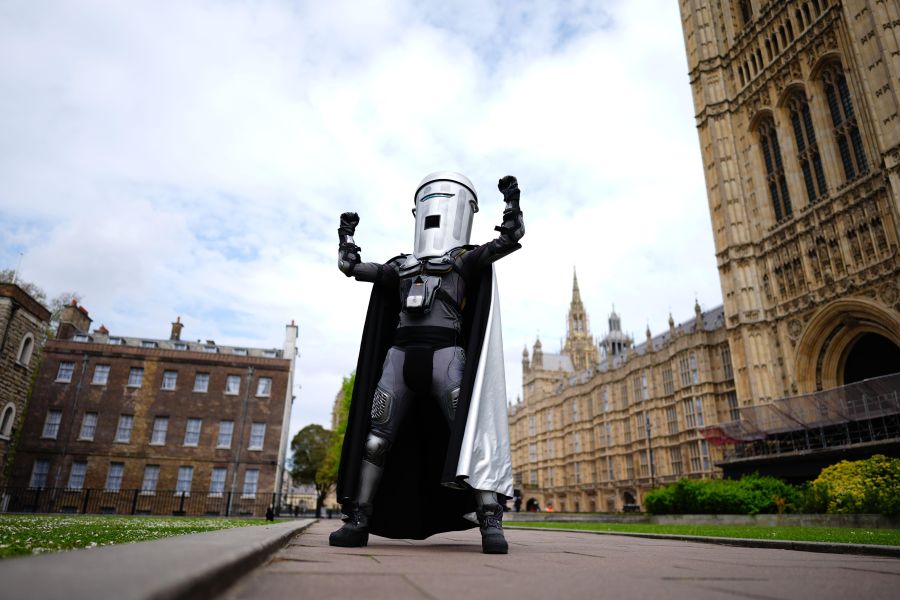
Count Me In: Could Count Binface be Clacton's newest MP? © PA Images / Alamy Stock Photo
Andy Burnham’s march towards Downing Street gathered extraordinary momentum this week, with the former Greater Manchester mayor effectively clearing the field in the Labour leadership contest before it had even begun. Having set out his pitch for a “rewired Britain” in Manchester last month, Burnham gave a hint of his approach to foreign policy in a Times article this week, in which he pledged unwavering support for NATO, Ukraine and the UK’s nuclear deterrent while linking increased defence spending to his wider economic agenda. Meanwhile, the numbers behind his leadership campaign have become increasingly striking. On the first day of nominations, Burnham secured the backing of 322 Labour MPs – around 80% of the Parliamentary Labour Party and almost four times the threshold required to enter the race. With rivals including Wes Streeting, Darren Jones and Al Carns all having ruled themselves out or endorsed him, it is now mathematically impossible for another candidate to secure the 81 nominations needed to make the ballot. That does not mean the process is entirely over. Under Labour’s rules, candidates must also secure support from affiliated organisations, typically through either major trade unions or other party affiliates, although Burnham is widely expected to clear that hurdle comfortably given the scale of parliamentary backing already behind him. Burnham is therefore expected to be confirmed as Labour leader next Friday, with a formal handover from Keir Starmer and an audience with the King to follow on Monday 20th July, at which point he’ll take the keys to No.10. The question in Westminster has therefore quickly shifted from whether Burnham will win, to what exactly he plans to do, and who will be sitting at the Cabinet table with him.
Nigel Farage threw Westminster a characteristically unconventional curveball on Tuesday by resigning as MP for Clacton to seek re-election in the by-election his departure has triggered. Framing the contest as a “people versus the establishment” battle, the Reform UK leader argued the voters of Clacton, rather than parliamentary investigators, journalists or political opponents, should be the ultimate judges of his conduct amid continuing scrutiny of his financial affairs and allegations over undeclared gifts, all of which he strongly denies. In what may be one of her last ceremonial acts as Chancellor, it was actually down to Rachel Reeves to trigger the by-election by appointing Farage as Steward and Bailiff of the Manor of Northstead. Despite some calls to delay the move given the ongoing investigations, she announced she’d complied with his request, calling it a “farce and a desperate distraction”, but adding “if he wants to spend the summer arguing with a bin, I won't stop him” (more on that below…). The election will take place on Thursday 13th August. One important unanswered question is what happens next with the parliamentary standards investigations hanging over Farage. While his resignation means the current inquiry is effectively paused while he is no longer an MP, it is expected to resume should he win the by-election and return to Westminster, meaning – should the investigation not go in his favour – this may all culminate in a suspension, recall petition and repeat by-election at a later date. What makes the contest especially unusual is the response from Farage’s opponents. Labour, the Conservatives, the Liberal Democrats, the Greens and Restore Britain have all announced they will not field candidates, leaving the attention to quickly, and unexpectedly, fall on one candidate who has stood in almost – but not quite – as many elections to Parliament as Farage himself…
As Clacton prepares for its forthcoming by-election, voters are faced with a choice that can only be described as peak British democracy. On one side stands Nigel Farage. On the other stands Count Binface: intergalactic space warrior, leader of the Recyclons, and the only candidate whose manifesto includes both housing policy and ice-cream pricing.
Count Binface first emerged on the political scene in 2019, although veteran observers will remember his previous incarnation, Lord Buckethead, who challenged Theresa May in the 2017 general election. Following a copyright dispute worthy of a particularly niche episode of The Thick of It, Lord Buckethead underwent a regeneration and returned as Count Binface, complete with metallic headgear and an unwavering commitment to making British politics slightly less dull.
Since then, the Count has built an enviable electoral CV. He has stood against Boris Johnson, Rishi Sunak, Sadiq Khan and numerous other political heavyweights, invariably losing but somehow emerging with more dignity intact than some of his opponents. He describes himself as a 5,900-year-old alien from the planet Sigma IX and the leader of the Recyclons, which, in fairness, sounds no less plausible than some political biographies we’ve seen over the years.
His policy platform occupies that rare political territory where satire and genuine public service frequently overlap. Among his best-known pledges are building at least one affordable house, bringing back Ceefax, nationalising Adele, capping the price of a 99 Flake at 99p, and relocating a badly positioned hand dryer in a pub toilet in Uxbridge to a more sensible location. He has also proposed conscripting people who play loud music on public transport, forcing cyclists who ignore the Highway Code to ride unicycles, and, in a policy that could get many England football fans on board, scrapping VAR. While some may question the practicality of these measures, it must be said that none appears significantly more bizarre than recent developments in mainstream politics.
The Clacton contest has elevated Binface from comic sideshow to something approaching a serious novelty. With the major parties declining to challenge Farage in the by-election, the Count has unexpectedly found himself cast as the principal alternative. Bookmakers have even shortened his odds, proving once again that British politics is a genre unto itself.
Yet for all the jokes, Count Binface occupies a curious place in public life. His campaigns cleverly highlight the absurdities, contradictions and occasional pomposities of modern politics while also celebrating the democratic principle that anyone can stand for election – even a metallic-faced extraterrestrial with strong views on frozen confectionery.
As for the mystery of the man beneath the bin, we would never dream of unmasking him. Such behaviour would be irresponsible and quite possibly intergalactically illegal. Suffice it to say that, much like Batman and Bruce Wayne, Count Binface and comedian Jon Harvey have never been seen in the same room at the same time. We are therefore forced to conclude that they are entirely separate individuals, and any suggestion to the contrary is clearly the work of mischievous Earthlings.
Whether Clacton ultimately chooses Farage or the leader of the Recyclons, one thing is certain: British democracy remains gloriously incapable of taking itself completely seriously. And for that, Count Binface may deserve a medal – or at the very least, a reasonably priced 99 Flake.
£41bn – amount set to be spent on disability benefits by 2030, according to the Timms Review of PIP.
1% – UK GDP growth predicted by the IMF for 2026, a 0.2 percentage point increase from the previous forecast in April.
9.1 million – people who watched England beat Mexico 3-2 at 2am on Monday morning.
9 – number of times that Nigel Farage has stood for election as a Member of Parliament, including the upcoming by-election.
300% of GDP – level to which Britain’s public debt could rise by 2075 without any changes of course, according to the OBR’s Fiscal Risks and Sustainability report.
66% – proportion of businesses reporting concerns about inflation, according to the British Chambers of Commerce’s quarterly economic survey.
£900,000 – amount made by British hopeful Arthur Fery for reaching the Wimbledon semi-final.
32 – number of specially-engraved revolvers presented to NATO leaders by Turkish President Recep Tayyip Erdoğan following the alliance’s summit in Ankara. The unusual gift is likely to be Keir Starmer’s last as Prime Minister.
Democracy Minister Samantha Dixon unveiled tougher rules to curb foreign influence in elections in a statement to MPs on Monday, following the publication of the Rycroft Review. Key measures include a cap on large donations from recent arrivals – requiring at least a year’s UK residency before exceeding limits – and stricter checks on company donations, now tied to post-tax profits rather than revenue. Candidates must also verify funding sources, with pre-candidacy donations above £2,230 declared for the first time. Ministers said the reforms, which have been seen as a direct response to donations received by Reform UK and Nigel Farage, will “shut down dodgy funding” and strengthen transparency.
The MOD agreed a £2.4 billion maritime partnership with the Netherlands to build next-generation amphibious transport ships, boosting both NATO capability and British shipbuilding. Based on a Dutch design but constructed in UK yards, the vessels will carry troops, vehicles and drones, supporting a more advanced hybrid Navy. Each country will operate four ships, strengthening joint response to crises.
The Cabinet Office has teamed up with Airbnb to crack down on social housing fraud, targeting tenants who illegally sublet their homes. By sharing data with local authorities, the scheme has already identified 470 potential fraud cases, with offenders facing eviction, fines, or up to two years in prison. Ministers say the move will help return thousands of homes – estimated at 5,800 across England – to families in genuine need.
Ed Miliband approved the UK’s second-largest solar farm, One Earth Solar, which could generate enough electricity to power over 200,000 homes annually. His department announced it was the 30th major clean energy project backed since July 2024, collectively capable of powering more than 19 million homes.
Kemi Badenoch delivered a speech in London on the Conservatives’ plan to defend Britain, stating that the Conservative Party would cut welfare to fund defence, making national security its first priority. She also announced that the Conservatives would replace the two-child benefit cap, establish a sovereign defence fund through repurposing Net Zero funding, keep the Triple Lock, and review out-of-work benefits for people who can work but are not working, as well as low-level conditions. She also announced later in the week that any Conservative candidate who backs net zero targets will be blocked from standing for the party.
The Department of Health unveiled a 10 Year Capital Plan to modernise the NHS, backed by investment that will rise to £15 billion by 2029/30. The plan targets rebuilding ageing facilities, upgrading technology and expanding care closer to home, including nearly 800 GP surgery improvements expected to deliver 9 million extra appointments. It also funds hospital repairs, the removal of unsafe RAAC materials, and 250 neighbourhood health centres.
The government unveiled the biggest overhaul of the UK veterinary sector in 60 years. New proposals require vets to publish clear price lists, cap prescription fees at £21, and disclose ownership structures to boost competition. A new independent ombudsman will handle unresolved complaints, with powers to make binding decisions.
Fifteen towns have been shortlisted for the UK’s first-ever Town of Culture award, following nearly 400 applications from across the country. Winners will be chosen across small, medium and large categories, with the overall winner for 2028 receiving £3 million to deliver a year-long cultural programme. Each shortlisted town will receive £60,000 to develop its bid. Those shortlisted are: Small: Isle of Bute, Lerwick, Sandown, Strabane, and Stockton Town Centre Ward; Medium: Corby, Great Yarmouth, Leith, Pontypridd, and Port Talbot; and Large: Basildon, Birkenhead, Grimsby and Rotherham.
The Government launched a new crackdown on youth vaping, proposing plain, standardised packaging and tighter controls on how products are marketed and displayed. Plans include restricting flavours to simple descriptions, limiting devices to neutral colours, and keeping vapes out of sight in shops. The move follows evidence that around one million 11–17-year-olds in Great Britain tried vaping in 2025.
Four major cloud providers have been designated as Critical Third Parties to strengthen the resilience of the financial system. The move brings Microsoft, Google, Amazon Web Services and Oracle under direct oversight from regulators such as the Bank of England and FCA, reflecting growing reliance on cloud infrastructure across banking and finance.
More than 60 UK businesses signed a new government-backed Cyber Resilience Pledge aimed at strengthening defences against rising cyber threats. Launched on 7 July 2026, the initiative, signed by the likes of M&S, Nationwide, ITV, Microsoft UK and Cloudflare, called calls for three core actions: board-level accountability for cyber security, adoption of NCSC Early Warning tools, and stronger supply-chain standards such as Cyber Essentials.
The Personal Independence Payment (PIP) is “not fit for purpose”, so states the interim Timms Review published this week which highlighted widespread dissatisfaction with how the benefit operates. Having received evidence from nearly 40,000 contributors, the interim report says the system remains a vital financial lifeline but often creates barriers to work and daily life. The review will now develop reforms, with final recommendations expected in autumn, aiming to create a fairer, more trusted system.
The Government expanded funding to remove dangerous cladding from residential buildings under 11 metres, prioritising those with the highest fire safety risks. Previously, many lower rise buildings were excluded from support, leaving leaseholders facing large remediation costs. The change shifts focus from building height to overall risk, ensuring the most unsafe homes are addressed first. Ministers said residents “shouldn’t be left worrying” due to eligibility gaps.
Legislation largely took a back seat in the Commons this week, with much of the parliamentary agenda dominated by ministerial statements and debates. The week began with Defence Secretary Dan Jarvis at the dispatch box for his first, and potentially last, Defence OPQ session, where he faced questions on the Defence Investment Plan. The Conservatives used their two Opposition Day Debates to focus on summer jobs and the early release of prisoners, with the party criticising the Government’s employment rights reforms and its early release scheme, which was introduced to ease pressure on prison capacity. One timely UQ, with the summer holidays fast approaching, focused on the EU’s Entry/Exit System. Much of the discussion centred on MPs’ concerns about the long queues their constituents are expected to face when travelling this summer and, definitely not about the holidays many will be booked on the second the Commons rises next week.
The Lords had a comparatively more productive legislative week. The Railways Bill had its second reading, while the Steel Industry (Nationalisation) Bill completed report stage. Peers also debated progress on the draft Defence Readiness Bill, as well as reports from the Constitution Committee and the UK Engagement with Space Committee. Meanwhile, the National Security (State Threats) Bill, which provides for the designation of bodies involved in foreign power threat activity, received Royal Assent.
To kick things off with an appointment about appointments, His Majesty The King has approved Fiona Cannon as the new Commissioner for Public Appointments. Taking up the role on 9th July for a five-year, non-renewable term, Cannon will oversee the regulation of ministerial appointments to the boards of public bodies across the UK and Welsh Governments.
The Treasury had a busy week, reappointing Dr Vanessa Lawrence, Andrew Halford and Iain Mackay as Non-Executive Directors of UK Government Investments. Over at the Office for Budget Responsibility, Professor David Miles has been lined up for a second and final term on the Budget Responsibility Committee, subject to Treasury Committee approval, while Liz Thornhill will continue as a Non-Executive Director at the Government Actuary's Department.
Alastair King-Smith has been appointed as the next Ambassador to the Czech Republic from January 2027, succeeding Matthew Field, while Geraldine McCafferty will head to the United Arab Emirates in August to take over from Edward Hobart.
Across the Atlantic, Lieutenant General Nick Perry has made a little bit of history, becoming the first British officer to be appointed Commander of NATO's Joint Force Command Norfolk. He will take up the post in September, overseeing NATO operations across the Atlantic, the High North and northern Europe.
Andy Marsh has been tapped as the Government’s preferred candidate to become HM Chief Inspector of Constabulary in England and Wales and Chief Inspector of Fire & Rescue in England. Marsh has led the College of Policing since 2021 and now awaits the next stage of the appointments process.
Royal Museums Greenwich welcomed a fresh intake of trustees, with Alexandra Butler, Sanjeev Gupta and Marshall Manson joining the board for terms of four years, whilst Clare Anderson, Lance Batchelor and Stephen Deuchar have all been reappointed for another term.
The Bank of England has announced that Rhys Phillips will become its next Chief Cashier and Director of Notes, taking up the role on 19 October 2026.
Homes England has strengthened its senior leadership team with the appointment of Melanie Montanari as Chief Operating Officer, takin up the role on 7 September.
Finally, the Lord Chancellor has reappointed John Cuss, Sue Prince, Laurence Shaw and Elizabeth Smart as non-judicial members of the Civil Justice Council for a further three-year term from 1 January 2027.
As scrutiny around Nigel Farage intensifies, Deltapoll released a survey on the appropriate punishment for MPs who break donations rules. Data revealed that 29% of people believe that an MP who breaks these rules should be permanently banned from elected office, with just 11% of people believing the MP should be allowed to stand in a by-election. Broken down by area, it is those in Scotland who most strongly support a permanent exclusion (35%), whilst London is the most lenient. But perhaps more worrying for Farage, 33% of those intending to vote for Reform UK would support a permanent ban from elected office.
With soon to be Prime Minister Andy Burnham pledging Manchesterism, through plans to devolve power from Westminster to other regions of the UK, the Institute for Government have called for devolution to ‘materially improve ordinary lives’ in their latest report on the radical rewiring of the state. The report argued that devolution is about a different state operating model that focuses on productivity and prevention, with an efficient and effective allocation of public resources. The report also called for Manchester, as the ‘Prevention Demonstrator’, to become the blueprint for devolution in order to improve residents lives, and create a ‘more productive and financially sustainable system’ across the country.
Four kids in every Year 6 class are set to be NEET for 12 months or more warned The Centre for Social Justice. Analysis by the CSJ has found that the NEET crisis currently swarming Britain, leading to 1 million under-25s out of education, employment or training, is being ‘fuelled’ by an education system failing to set children up for work. During the 2024/25 academic year, one in five Year-6 pupils did not meet expected reading standards, leading to expectations that 40,000 of them will spend 12 months as a NEET in their early adult life. This comes following the Milburn Review that reported the UK’s NEETs to be three times that of the Netherlands, and a call for an expansion to technical education as seen there.
As Jude Bellingham guided England to the World Cup quarter-finals, rumblings of a bank holiday began, should England do what no England senior team have done since 1966, and win the World Cup. According to YouGov polling, 54% of Brits would support the idea, with just 34% against the idea. Support increases to 63% for 18-24 and 25-49 year olds, but dips to just 28% for those over 65.
It wasn’t a good week for anyone who values the integrity of sport, as football became the latest subject President Trump understands better than anyone, including professional referees. Trump admitted to getting on the phone with FIFA President Gianni Infantino to ask (or demand) that USA striker Folarin Balogun’s one-match suspension following his red card against Bosnia be repealed. He insisted he understood the game so well thanks to his well-known background as a “good athlete”, shortly after admitting he didn’t actually know what a red card meant. After declaring the rule unfair when learning it meant Balogun would miss the next match, he got his wish, and the decision was overturned, leaving the football world a mixture of bemused and furious. Nevertheless, perhaps we'll see Trump in the Premier League VAR room next season.
Deputy PMQs had a slightly makeshift feel this week, with the main party leaders – and Nigel Farage – all absent, albeit for very different reasons. Stepping into the gap, Deputy Lib Dem Leader Daisy Cooper seized the opportunity to land one of the afternoon's better jokes. She reflected on Farage's former favourite slogan, "leave means leave", and observed that he had at least practised what he preached before pointing out that his potential return following the Clacton by-election suggested the slogan came with a few notable exceptions. It was also a welcome opportunity for the Lib Dems to steer the conversation back to the European Union – who could’ve predicted that!
Though we enjoyed that joke, it had nothing on Speaker of the House Lindsay Hoyle’s frankly hilarious gag the following day about… tuna. In a question about the geographical distribution of tuna fishing licences, Jim Shannon became Hoyle’s latest victim when, after being called to speak, he was referred to as “John West”, the canned tuna brand, sending the Chamber into raptures and leaving Shannon slightly more red-faced than usual.