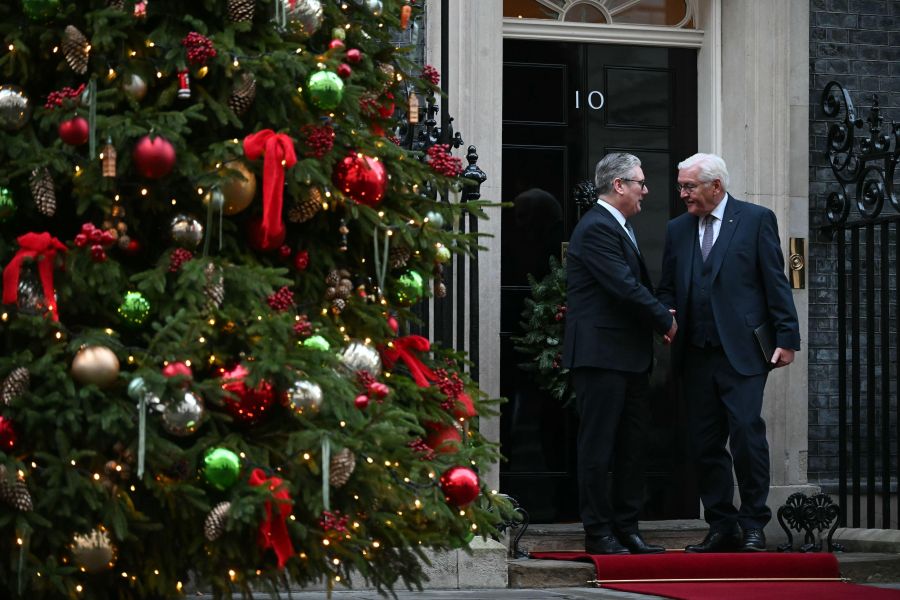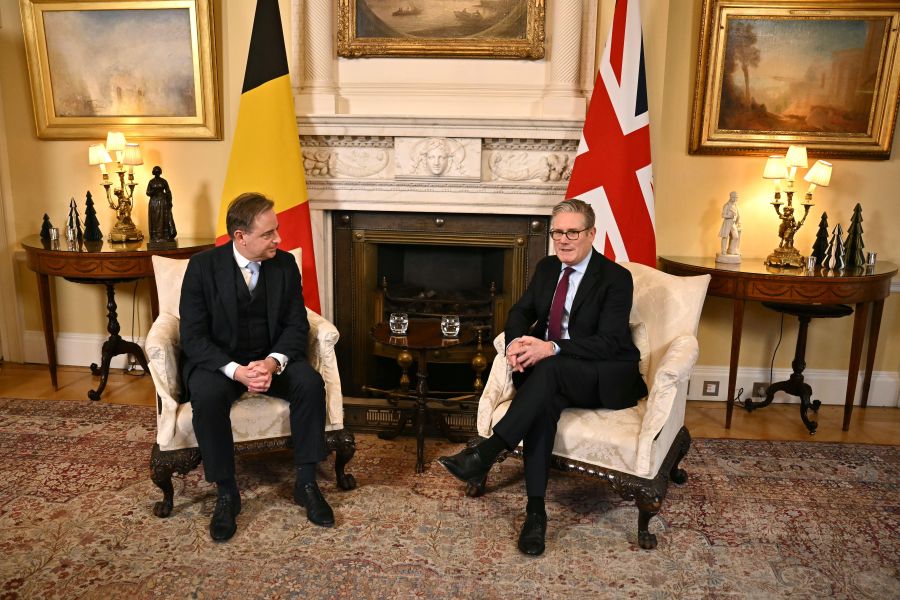
The Prime Minister meets with Belgian PM Bart De Wever at 10 Downing Street, as he continues to hold out on the seizure of frozen Russian assets. Talks on Ukraine will continue next week. © PA Images / Alamy Stock Photo
The Chancellor addressed a key issue with the longest Budget in history this week by acknowledging to MPs on the Treasury Select Committee that there had been “too many leaks” and too much speculation in the weeks and months leading up to her big dispatch box moment on November 26th. Describing the leaks as “very damaging” and “unacceptable” she insisted however that she and her team had not disclosed confidential information. Whilst arguing that an article in the FT on 13th November – that accurately revealed she had changed course and was not planning on raising income tax rate in the Budget – was “partial and inaccurate”, she stressed it was “incredibly damaging and frustrating” and claimed it had not been signed off by her or another minister. A full leak inquiry has been initiated – due to conclude early next year – but officials joining the Chancellor at the committee session refused to commit to provide MPs with its full results. She also revealed that the decision to freeze tax thresholds, rather than raise income tax rates, had been taken jointly by her and the Prime Minister and was keen to stress she and Keir Starmer have a “very close relationship”. Following on from the remarkable early publication of the OBR’s economic and fiscal forecast a full hour before the Chancellor delivered the Budget, she announced the OBR will publish all future documentation on the Government’s website to avoid further IT disasters.
The Prime Minister continued his whirlwind diplomacy, hosting President Macron, President Zelenskyy and Chancellor Merz at Downing Street on Monday. This was followed by yet another call with European nations prepared to deploy soldiers to Ukraine under a future (and as yet totally abstract) ceasefire agreement. Alongside this, he met with Belgium’s Prime Minister Bart De Wever in a shmooze-fest, as the Belgium leader holds out on the seizure of frozen Russian assets. Starmer is then expected in Berlin on Monday for further talks on peace in Ukraine, while officials continue to hash it out over the weekend.
22 – the growing number of ex-Tory MPs throwing in their lot and joining Reform UK.
<250,000 – Labour’s current membership figure, down from 333,235 last year, meaning Reform UK’s ~ 268,820 members make it the largest party.
£3,119 – how much fans can expect to pay if they want the cheapest ticket for the World Cup final in the MetLife Stadium.
2,660 – average daily flu cases per day in hospital, the highest level at this time of year since records began, with the number expected to rise.
1/21 – the proportion of people in Westminster who are homeless, with 1/45 people in London being homeless on a given day in 2025, according to research published by the charity Shelter.
25 – new Labour peers nominated by Keir Starmer.
£300,000 – the largest unlawful political donation on record in the UK, made by private German bank Berenberg to the Conservatives back in July (swiftly returned by the party it must be pointed out).
1% - fewer people out Christmas shopping this week, when comparing retail footfall with the equivalent week of 2024.
Baroness Anne Longfield was appointed to lead the Government’s much-delayed and politically troubled inquiry into the grooming gangs scandal. The former children’s commissioner will lead the three-year long statutory inquiry which the Home Office confirmed would specifically focus on ‘ethnicity, religion and culture.’ The Conservatives cried foul, suggesting the final report will not be published until after the next general election.
Speaking of delays – the report into IRA spy ‘Stakeknife’ was published after a nine-year inquiry. It found that Freddie Scappaticci, who operated as an IRA informant for the British Army during the Troubles, was linked to 14 murders and 15 abductions by the IRA while also working for the British state.
The Covid Counter Fraud Commissioner published his final report, which found that schemes such as Bounce Back Loans and Eat Out to Help Out were ‘rolled out with huge fraud risks and no early safeguards.’ It highlighted issues such as 'weak accountability, bad quality data and poor contracting', and identified a staggering £10.9bn of loss, of which almost £400m has so far been recouped.
With the 2025 deadline looming, the Government rushed out a number of promised strategies. DCMS released the first National Youth Strategy, which aims to rebuild youth services by building or refurbishing up to 250 youth facilities, launching a network of 50 Young Futures Hubs, supporting organisations in underserved areas to deliver high-quality youth work and activities, and recruiting and training youth workers and volunteers. Alongside this, the DWP announced further funding for apprenticeships, which will help devolved leaders support young people into jobs.
MHCLG published its National Plan to End Homelessness, which sets out three key pledges to be fulfilled by the end of this parliament: halving the number of long-term rough sleepers; ending the unlawful use of B&Bs for families; and preventing more households from becoming homeless in the first place. It also includes a 'Duty to Collaborate' on public bodies to work together to prevent homelessness, which will be brought forward in legislation.
The Home Office released its Anti-Corruption Strategy, which will also focus on three areas: combatting corrupt actors and their funds in the UK and overseas; tackling vulnerabilities to corruption within UK institutions and systems; and deepening international partnerships aimed at building global resilience to corruption and broader illicit finance. The UK will also host a UK Countering Illicit Finance Summit in 2026, when it will release an Anti-Money Laundering and Asset Recovery Strategy.
Simon Roddy was appointed CEO of Great British Energy – Nuclear and will take up the role in March 2026. He was previously Senior Vice President for Shell UK.
David Lammy and Attorney General Lord Hermer joined European counterparts in Strasbourg for negotiations on changes to the European Convention on Human Rights (ECHR) to better reflect the modern realities of immigration. They agreed to work towards adopting a ‘political declaration’ on ECHR reform at a summit next May.
The Government stuffed 34 new peers into the House of Lords – 25 Labour, 5 Liberal Democrats and 3 Conservatives, including former Number 10 communications director Matthew Doyle, Iceland supermarket chairman Richard Walker and the former Olympian - more recently known as a critic of trans women in women's sport - Sharron Davies. Despite this, the Conservatives remain the largest party in the upper chamber.
The UK economy unexpectedly shrunk by 0.1% in October. The ONS attributed this partially to the collapse in automotive manufacturing following the cyber-attack at Jaguar Land Rover, although opposition parties blamed the Government’s pre-Budget messaging.
The Prime Minister will give evidence to the Liaison Committee on Monday, with the session focusing on standards in public life and the anniversary of the publication of Labour’s Plan for Change.
The USA published its National Security Strategy, which stated that the days of the US ‘propping up the entire world order…are over’, claimed that migration would lead to ‘civilisational erasure’ in Europe, failed to criticise Russia’s invasion of Ukraine and accused European leaders of having ‘unrealistic expectations for the war’, said it wanted to ‘end the perception…of NATO as a perpetually expanding alliance’, and pledged to support ‘patriotic’ European parties in their ‘resistance to Europe’s current trajectory.’ In Parliament, MPs declared that it heralded the end of the special relationship, and required the UK to reevaluate its own security strategy. Meanwhile, NATO Secretary General Mark Rutte delivered a doom-laden speech in Berlin in which he warned that Europe is “Russia’s next target” and that the continent “must be prepared for the scale of war our grandparents or great-grandparents endured.” Happy weekend all…
In the Green Corner this week, amongst the regular myriad of statements and urgent questions eating into the legislative agenda, MPs finally saw off the Planning and Infrastructure Bill after agreement was reached between the Government and the Lords over a final, final, amendment. Public Affairs professionals across the land will be collapsing exhausted but relieved the Bill is finally done. No rest for the wicked however… as one Bill ends, another begins with the Railways setting off on its slow, no doubt delayed journey through Parliament on Tuesday. Wednesday saw opposition day debates including on the ‘Conduct of the Chancellor of the Exchequer’ (earning a pre-emptive warning from the Deputy Speaker calling for “good temper and moderation”), before MPs ended the week with backbench business debates on St Andrew’s Day and Foreign Interference.
Across Central Lobby, legislation was in full swing with the second reading of the English Devolution and Community Empowerment Bill. The Policing and Crime Bill continued its long committee stage and the Employment Rights Bill got kicked back to the Commons with further changes (with the Government pledging to send it straight back at full speed to the upper house next week with the speed of an Olympic ping-pong champion). The Sustainable Aviation Fuel Bill also flew through its committee stage, hoping for a swift landing on the King’s desk early next year.
Reform UK’s support is growing in Scotland ahead of next year’s elections, Ipsos found in their poll this week. The latest voting intention survey found Farage’s party trailing behind the nationalists in constituency votes, having gained 4 points since the last poll in June, putting them at 18% (with the SNP on 35%). This has put Reform UK above the Scottish Labour Party who fell 7 points to 16%. Of the biggest issues for Scottish voters, healthcare and the NHS polled first, on 57%, followed by inflation (41%) and immigration (30%). Independence has become only the sixth biggest concern, with 20% of those polled seeing it as an issue.
Scrap the triple lock to invest in young working class boys who are falling behind, concluded the Centre for Social Justice’s report out last weekend. The report links ‘the massive breakdown in family stability to low academic achievement and worsening physical and mental health outcomes of white working-class boys’, arguing that the protections in the triple lock have come at the expense of younger generations. Making recommendations on what the money from the triple lock should be spent on, the think tank suggests: overhauling support in the early years, ensuring that childcare credits are paid directly to parents, child benefits are frontloaded, and birth registrations are moved to Family Hubs; £1bn of investment into the expansion of Family Hubs across the UK; launching a public health campaign on the dangers of prolonged screen use in the early years; and introducing a transferable tax allowance for married couples and subsidised wedding costs for lower-income couples.
‘The steadily rising premium added to UK borrowing costs since Labour took office in 2024 is showing signs of unwinding’ the IPPR found in their recent analysis. The report suggests that the reasons for the UK premium are down to whether the market believes that policy plans will be delivered, rather than the policies themselves, which originated following Liz Truss’ Mini Budget. The report argues that ‘continuing to assure markets could save the Exchequer billions of pounds in reduced borrowing cost’, recommending that the Government: stick to the current set of fiscal plans, to reassure the markets and prove credibility; pause the Bank of England’s active gilt sales as part of quantitative tightening to reduce the UK premium; and reduce issuance of long dated gilts, and making the Debt Management Office shift reliance towards medium-term debt.
Keir Starmer has now officially joined TikTok, perhaps inspired by his cringeworthy 6-7 dance at a primary school a few weeks back. Good luck to whichever Gen-Z’er is behind that camera, although not a bad first week with a surprise appearance from bus aunty (iykyk)
And if you think central Government is bad, just a reminder of the chaos that goes on across local government with this video that popped up this week of a Labour councillor going to the toilet in the middle of the planning meeting with his camera still running (h/t HIGNFY). It’s almost reminiscent of the “you have no authority Jackie Weaver” covid days!