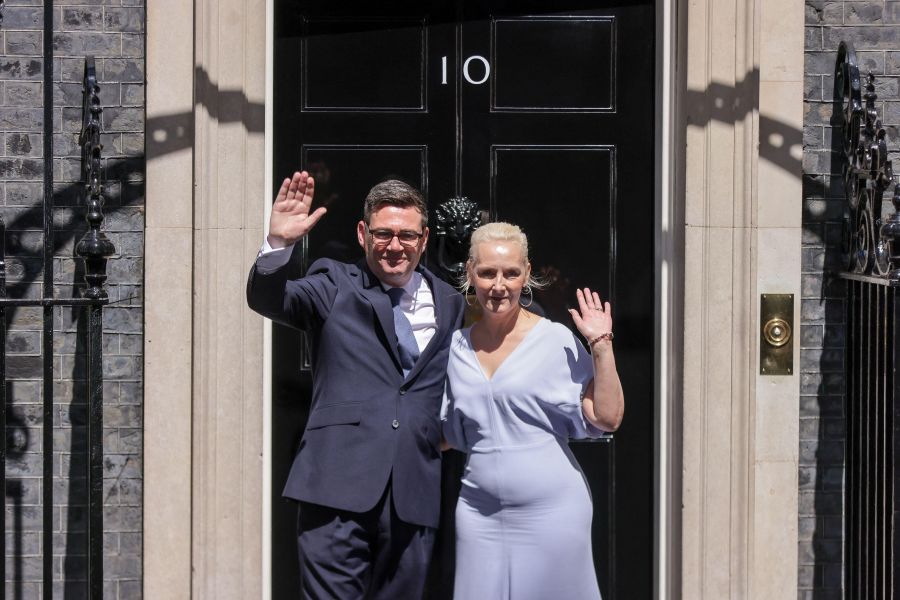
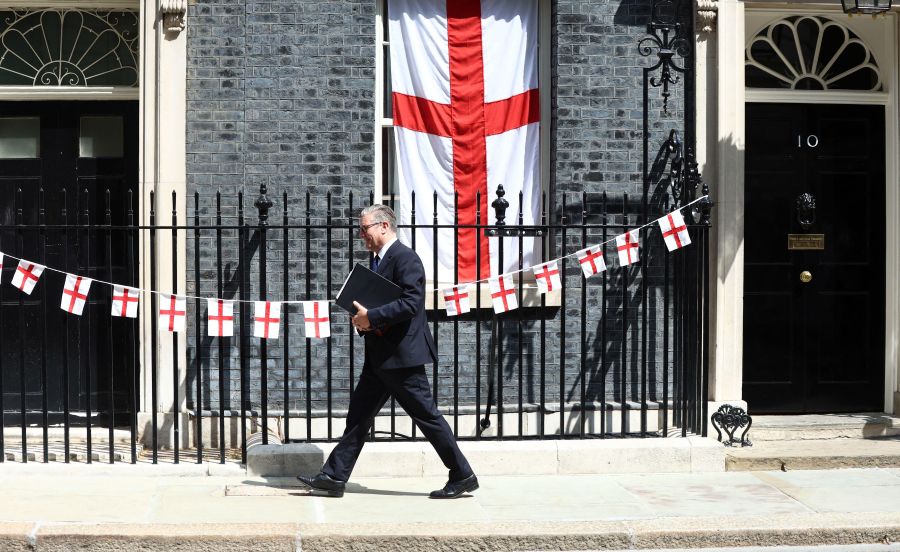
What is a Burnhamite? The new Prime Minister may have joked that he hopes no such thing will ever be spoken of, in a new Labour (though decidedly not New Labour) party shorn of factional baggage. However, Burnham gave us a few clues this week with a suite of announcements focused on the problems he believes have dogged Britain for the last few decades. On Monday, the Prime Minister set out a new approach to education, designed to ensure that “Britain will value the hard hat as much as the graduation cap.” The Government’s proposals would set up new technical education routes for 14-year-olds, intended to complement core academic subjects with a path into jobs in their local area. He also made a bold move to invite the Tories and Liberal Democrats for cross-party talks on reforming social care, which he suggested may require greater public intervention and integration with the NHS, and visited the BAE Systems shipyard at Barrow-in-Furness to announce the next phase of investment in Britain’s nuclear deterrent submarines. However, Burnham’s last announcement was on the issue perhaps closest to his heart: the Prime Minister committed to giving regional authorities a greater share of income tax revenues, intended to allow them greater responsibility and decision-making powers. Supporters argue that this will bring Britain, which they have often suggested is over-centralised, closer in line with the internal governance of its European peers.
While Burnham spent the week setting out his stall, some still aren’t buying. While the song Making Plans For Nigel might’ve been in the news for other unfortunate reasons this week, the perception that the Government wishes to return to an age when working-class kids went straight from school to (recently re-nationalised) British Steel has ruffled some feathers. Meanwhile, others pointed out that the £8.4bn set out for the Royal Navy’s nuclear submarines wasn’t exactly new money – indeed, it was covered by the former Prime Minister’s Defence Investment Plan. In addition, Chancellor of the Duchy of Lancaster Louise Haigh received flak for suggesting in an interview that local authorities wouldn’t be able to use their proposed new powers to offer tax rebates, insisting that they should be used for investment – or, to some, simply ringfenced for public spending commitments. Clearly, then, if the Burnhamites have aspired to drum up some recruits to their re-industrialising, decentralising cause this week, they have a bit more convincing to do.
Andy Burnham entered office promising “the biggest changes in the last forty years” and this week announced the biggest transfer of power away from Westminster in a generation. It is a bold pledge from the so-called "King of the North", who is looking to replicate his Manchester success by decentralising power from Westminster to “every postcode in the land”. This is music to the ears of communities that have felt neglected by Westminster’s elite and, it seems, politically important, with Labour topping an opinion poll for the first time in 16 months this week. Burnham has followed his words with action, appointing the most northern Cabinet since the 1970s. Thirteen of the Cabinet's 26 major posts are held by MPs from northern constituencies, compared with just six from London and southern England. And most significantly, Burnham has quite literally moved Number 10 up north (for some of the week anyway) as he and other key ministers, including Housing Secretary Angela Rayner and Education Secretary Lucy Powell, are set to work out of Manchester’s No.10 North. These decisions mark a strategy to address long-standing concerns around the concentration of political power in Westminster.
Several governments have faced criticism of forgetting about the parts of the country they couldn’t see from their seats in Westminster. While Scotland has dominated the devolution debate in recent decades, the UK's first substantial experience of devolved government came in Northern Ireland with the creation of the Northern Ireland Parliament in 1921. The Ulster Unionist Party held power until the Parliament was suspended in 1972 and Westminster took direct rule during the Troubles. During the 1960s, rising support for the SNP and Welsh cultural nationalism pushed devolution higher on the political agenda. Both major parties increasingly saw devolved institutions as a means of responding to growing regional political identities. For Scotland, Ted Heath’s Declaration of Perth in the late 1960s demonstrated devolution’s power as an electoral tool, with Heath pledging support to a form of Scottish devolution, to combat the rise of the Scottish National Party at the time. In Wales, devolution was marked by a rise in the Welsh language campaign, with the position of Secretary of State for Wales created in 1964.
The 70s saw a distinct party split on devolution for the first time, as the Labour Government firmly shifted their support towards devolution in light of the rising political importance and influence of the SNP and Plaid Cymru. A weak Labour Government not only led to an increase in party seats (11) for the SNP in the October 1974 general election, but culminated in devolution referendums in Scotland and Wales. Although a narrow majority of Scots voted in favour, turnout requirements prevented implementation, while Welsh voters overwhelmingly rejected the proposal. Enter Margaret Thatcher, who dropped Conservative commitments to Scottish devolution in 1976, despite rising nationalist sentiment in the early and mid-1970s due to the discovery of North Sea oil. A similar story followed in Wales, and the closure of coal mines and rapid deindustrialisation saw a rise in Welsh nationalism.
Labour’s return to political power and Tony Blair’s premiership saw successful referendums in Scotland and Wales, the establishment of new legislatures transferring control of important public services such as health and education, while the Good Friday Agreement restored devolved government in Northern Ireland. Electoral devolution, however, did not end constitutional debate. Scotland's 2014 independence referendum demonstrated the continuing strength of nationalist sentiment, epitomised by an 84.6% turnout, and today – almost 30 years since the creation of the Scottish and Welsh Parliaments – nationalist parties are the largest in each of the devolved administrations, though Labour has repeatedly opposed calls for further independence referendums.
England has not been immune to devolution. London gained its first elected mayor in 2000, attempts to introduce regional assemblies were rejected in the North East in 2004, and 2014 saw the landmark devolution deal for the Greater Manchester Combined Authority. The Brexit referendum exposed fractures within England, as only Greater London had a majority vote to remain, and highlighted further divisions within the UK as only Scotland and Northern Ireland voted to remain.
Burnham's "Manchesterism" seeks to demonstrate that government can be rooted in places that have historically felt ignored by Westminster… something that is important for a man without an official mandate outside of Makerfield, as he grapples with a problem that no British Prime Minister has solved. However, whether his strategy can genuinely address regional discontent remains uncertain. Critics may argue that relocating ministers to Manchester and increasing northern representation within Cabinet risks prioritising symbolism over structural reform, with previous governments also pledging to rebalance the UK economy and political system with little success. The success of Burnham's programme will rest less on geography and more on whether those outside of London feel the benefits of his attempts to shift power away from Westminster.
Ultimately, Burnham's commitment to devolution represents the latest chapter in a century-long attempt to reconcile the highly centralised British state with increasingly diverse regional identities and political priorities. Burnham's challenge is not simply to move government northwards, but to demonstrate that decentralisation can produce tangible economic and political outcomes. If he fails, the nationalist and regional grievances that helped propel devolution onto the political agenda are unlikely to disappear; if he succeeds, he may fundamentally reshape the relationship between Westminster and the rest of the United Kingdom.
399 million – the number of single-use plastic carrier bags sold in 2025-26, down from 437 million the year before.
3.65% – interest rate held at for the next six weeks.
£7.37bn – profits recorded by Shell for April-June 2026.
2,877 – heat-related deaths caused by May and June heatwaves in the UK.
49,000 – the number of migrants estimated to have crossed into the Spanish enclave of Ceuta from Morocco in the last 24 hours.
73% – percentage of Brits that chose to instantly receive £50,000 instead of flipping a coin for a chance to win £1m, when surveyed.
55 – number of European countries threatening to boycott future FIFA World Cup’s if Gianni Infantino goes ahead with proposals to sell off portions of the competition.
25.14% – turnout in the Greater Manchester Mayoral election, which is still being counted.
The Mother of the House, Diane Abbott, has been readmitted to the Labour Party after being suspended for more than a year following an antisemitism row. Abbott said she was issued a "formal warning", while a party spokesperson stated that the MP had "apologised". Joani Reid, the MP for East Kilbride and Strathaven, has also been readmitted after voluntarily suspending herself from the party in March of this year following the arrest of her husband on suspicion of spying for China. Meanwhile, Karl Turner, the MP for Kingston upon Hull East, is hopeful to return to the fold after losing the whip over what has been described as "uncollegiate" comments about colleagues (although he is reporting that it was due to his comments on the Government’s policy on jury trials).
President Trump took to his Truth Social account in the early hours of Friday morning to announce the news that Hamas has agreed to “completely disarm” in Gaza. He also said that Israel would withdraw from Gaza and called the agreement a “critical step towards Gaza finally being governed by a new Palestinian government”. As ever with Trump announcements (checks notes about another Middle East conflict), a degree of caution is probably sensible. Whether this proves to be the beginning of the end of the war in Gaza, or another Trump-styled diplomatic breakthrough that will be rendered meaningless before next week's weekly roundup, remains to be seen.
The Scottish Labour leadership contest has officially kicked off! Following the announcement that Anas Sarwar has been appointed Minister of State for Trade, several contenders have announced their intention to run. Monica Lennon and Michael Marra, Labour frontbenchers who have held a range of Shadow Cabinet portfolios, and Joe Fagan, who entered the Scottish Parliament in May after serving as a council leader, have all declared their candidacies.
Half of England has now been declared officially in drought by the Environment Agency, after exceptionally high temperatures and record low rainfall so far this summer. Seven areas are in drought, while another six are in prolonged dry weather, leaving just one area (Yorkshire and the North East) in normal status. Alongside this, the UK Health Security Agency released a new rapid early assessment showing there were 2,877 excess deaths caused by May and June heatwaves – a significant increase on the 1,504 excess deaths observed in summer 2025.
The Prime Minister hosted Ukrainian President Zelenskyy at His Majesty’s Naval Base, Portsmouth, where he paid tribute to the Ukrainian people’s resilience and perseverance in the face of Russian aggression. The leaders discussed further collaboration between the UK and Ukraine both diplomatically and militarily, with the PM saying he hopes to visit Ukraine soon.
The Mayor of London plans to invest £88.6 million to train the next generation of construction workers, with the package designed to tackle skills shortages, accelerate the delivery of new homes, and improve the energy efficiency of existing housing. The investment includes £43m for Further Education colleges, £2.5m to test and scale new training provision, and more than 2,700 industry teaching days delivered by construction professionals to learners.
The Mayor also launched his Clean Rivers and Waterways plan to transform the capital’s blue spaces over the next decade, announcing an additional £2.7m to boost the existing £13.55m funding already pledged on this. Over the next 10 years, the plan will aim to stop sewage and pollution flowing into rivers, improve river health with regular testing, create and restore 550 hectares of water habitats, improve habitats for fish and wildlife, and deliver waterways that are safe to swim in.
Kemi Badenoch held a press conference on the Government's prisoner early release scheme, calling on the Prime Minister to revoke the commencement order immediately and introduce emergency legislation by 2nd September. She was joined by a panel of victims whose perpetrators are due to be released under the scheme. Badenoch also urged the Government to increase prison capacity by building more prisons, renting prison places abroad, and removing foreign national offenders.
£8.4bn will be invested in the next stage of the UK’s Dreadnought nuclear deterrent submarine build programme, with £5.9bn to go to BAE Systems and £2.5bn to the wider supply chain. Confirmed during a visit by the Prime Minister to Barrow-in-Furness, he also unveiled a new apprenticeship scheme designed to help young people in the Northwest of England access skilled employment opportunities, with the initiative to help SMEs in the local supply chain recruit and train 30 apprentices across the next 3 years.
UK pension providers are exploring the establishment of a new UK Scale-up Fund of over £1bn to back the next generation of high-growth British science and technology companies, supported by the British Business Bank. The fund is intended to help 'the UK’s most promising innovators to scale faster, commercialise breakthrough technologies and create skilled jobs across the country.'
The most junior rungs of the Government ranks were announced this week, as the Parliamentary Private Secretaries (PPS) for each Department were announced… bear with us on this: 10 Downing Street – Nic Dakin, David Baines and Jo Platt; Cabinet Office – Alan Gemmell, Beccy Cooper and Natasha Irons; HM Treasury – John Grady, Alistair Strathern and Yuan Yang; FCDO – Anna Gelderd, Laura Kyrke-Smith and Chris Murray; Home Office – Michael Payne, Adam Thompson and Chris Vince; MoJ – Linsey Farnsworth, Joe Powell and Connor Rand; MOD – Gordon McKee, Steve Race and Rosie Wrighting; DESNZ – Tom Hayes, Jeevun Sandher and Steve Witherden; DfE – Elsie Blundell, Adam Jogee and Sarah Smith; DWP – David Pinto-Duschinsky, Elaine Stewart and Tim Roca; DHSC – Catherine Atkinson, David Burton-Sampson and Sonia Kumar; MHCLG – Olivia Blake, Luke Charters and Kirith Entwistle; DBIST – Deidre Costigan, Baggy Shanker and Marie Tidball; Defra – Jayne Kirkham and Lee Pitcher; DfT – Amanda Martin, Luke Murphy and Connor Naismith; DCMS – Jack Abbott, Lola McEvoy and Matthew Patrick; Scotland Office – Frank McNally and Alison Taylor; Wales Office – Becky Gittins; Northern Ireland Office – Pam Cox and Pamela Nash; Leader of the Commons – Amanda Hack; Leader of the Lords – Matt Rodda; Office for Equality and Opportunity – Callum Anderson and Alice Macdonald; Attorney General’s Office – Kevin Bonavia and Alex McIntyre; Housing Minister – Mary Kelly Foy; EU Relations Minister – Oliver Ryan; and AI Minister – Lauren Sullivan.
The Prime Minister appointed Bridget Phillipson as Labour Party Chair, replacing new Home Office Minister Anna Turley.
Foreign Secretary Ed Miliband will serve as UK Governor to the World Bank, meaning he will fly to Bangkok for its Annual Meeting in October.
Former Science Minister Lord Vallance has been made Chair of the PM’s new AI Taskforce, which will examine how AI can ‘transform public services and unlock growth and prosperity across the country.’
Gemma Stevenson has been appointed Trade Commissioner for the Middle East and Pakistan and Consul General to Dubai and the Northern Emirates.
Maura Sullivan has been appointed as Interim Chair of Gov Facility Services Limited.
Ruth Evans has been made the new Chair of the Criminal Legal Aid Advisory Board.
Kunle Barker and Tom Sleigh have joined the Board of Natural England, while Marsha Ramroop has joined the Marine Management Organisation Board.
The Labour Party is the most trusted by senior business decision makers to lead on the economy and business policy, according to polling from Ipsos. Labour is seen to have the best policies on the economy, business, work, and international trade, followed by Reform UK and then the Conservatives. There is more of a split on the new Prime Minister Andy Burnham, as 31% of those polled believe he has ‘what it takes’ to support business, with 31% also either uncertain or disagreeing.
Devolution needs to become a ‘permanent feature of the State’, argues a report from Re: State, calling for strategic authorities to be given the ‘fiscal freedom to invest for the long term’. Published ahead of the Prime Minister’s announcements on fiscal devolution this week, the report sets out a further nine priorities to enable areas to shape their own economic future, such as increasing devolution of employment and skills functions, supporting strategic authorities with the capacity to attract foreign direct investment, and empowering mayors to design and tailor development vehicles to local economic needs.
Britain is in ‘self-imposed economic stagnation’ through a failure to ‘build anything’, with a report from the Institute of Economic Affairs contending that the nation has a ‘shortage of premises of all kinds’ such as housing, offices, laboratories, and retail outlets. The report emphasises the importance of the ‘NIMBY vs YIMBY’ debate, concluding that if the ‘YIMBY’ grouping fails to cooperate across traditional political dividing lines, the nation will continue to suffer from economic stagnation.
The honesty of our elders should always be admired, as Andy Burnham found this week on a visit to a care home, where a resident inquired if he was “the local candidate.” Upon being informed he was, in fact, the Prime Minister, the rather unimpressed elderly gentleman choked out “what, another one? They keep changing them every five minutes”, to which the PM did his best to look abashed, although not enough to promise to find out who’s responsible for the most recent change…
Speaking of (ahem) honesty, Catherine West (the first MP to call on Starmer to stand down earlier this year) launched her campaign to become chair of the Housing, Communities and Local Government this week. Her pitch included a tongue in cheek quote from none other than Starmer himself, who said she ‘always speaks her mind’…
Ed Davey jumped at the chance to join cross-party talks on social reform this week, even though he was on holiday. The Lib Dem leader, who has extensive experience as a carer himself, joined the talks remotely, his laptop propped up on a stack of books which slightly unfortunately included Pandora’s Box. Perhaps not quite the analogy Andy Burnham will be hoping for from this attempt at solving the seemingly unsolvable problem…